

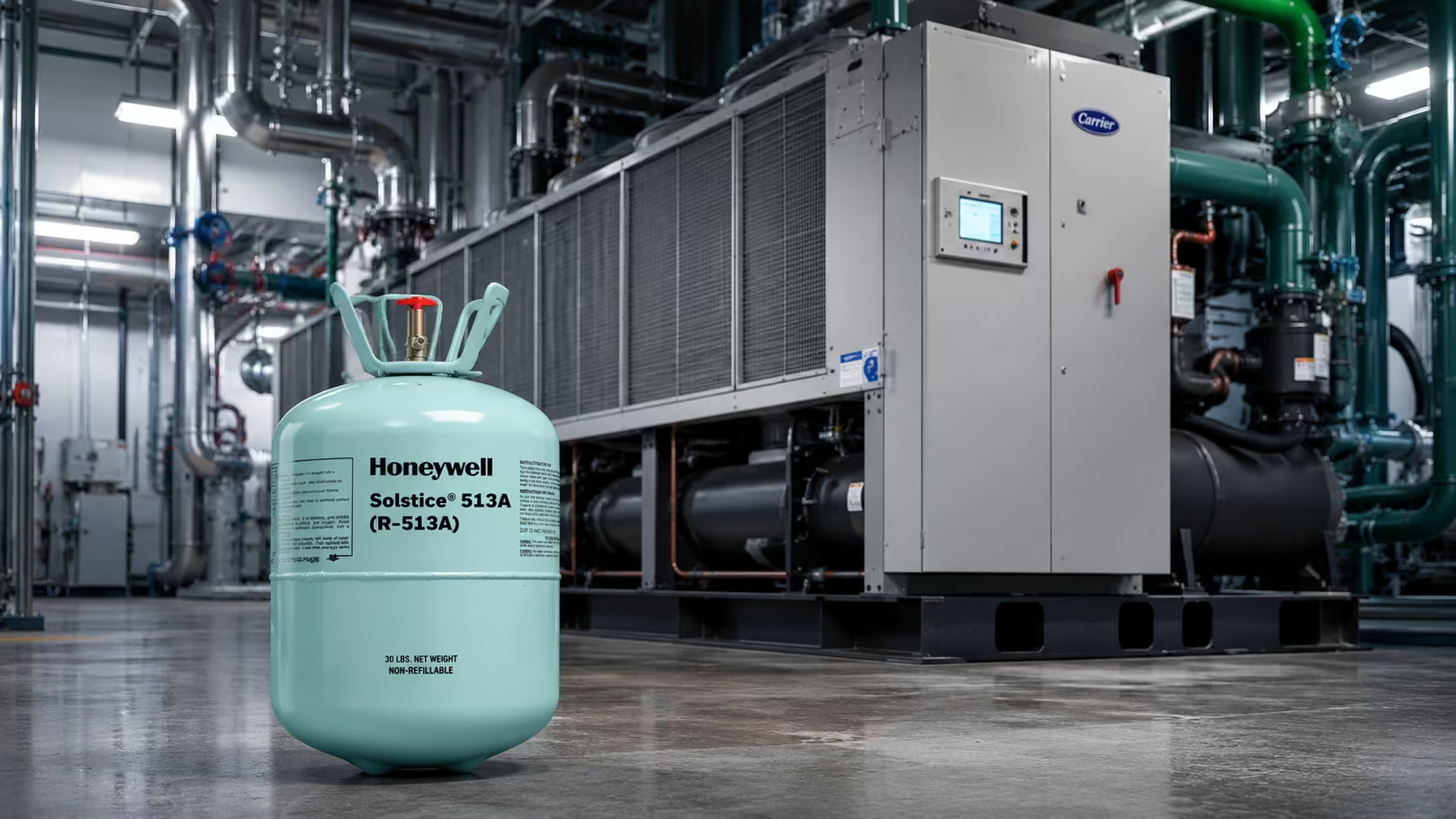
The global transition away from high-GWP refrigerants is reaching every corner of the HVAC and refrigeration industry. Chiller manufacturers, building owners, and facility engineers are under growing regulatory and sustainability pressure to move away from R-134a in large cooling systems. But the chiller market has specific requirements: consistent performance across a wide load range, reliable operation over long equipment lifetimes, and compliance with complex building codes. The replacement refrigerant must meet a very demanding set of criteria.
R-513A is increasingly recognized as the most practical and regulatory-compliant drop-in alternative to R-134a for centrifugal chillers, HVAC systems, and medium-temperature refrigeration. With a GWP of just 631 56% lower than R-134a’s GWP of 1,430 and an A1 non-flammable safety classification, R-513A offers a clear environmental improvement while preserving the safety profile that large-building system engineers require. This guide explains what R-513A is, how it performs, and why it is becoming the refrigerant of choice for sustainable chiller operations.
What Is R-513A Refrigerant?
R-513A is a binary HFO/HFC blend containing R-1234yf (56% by weight) and R-134a (44%). It was developed jointly by Chemours and Honeywell as a lower-GWP replacement for R-134a in centrifugal chiller and medium-temperature applications. The combination of HFO-1234yf’s very low GWP with R-134a’s thermodynamic reliability produces a blend that achieves significant environmental improvement while maintaining near-identical performance to pure R-134a.
R-513A is commercially available as Opteon XP10 (Chemours) and is also available in 30lb virgin cylinders from suppliers like Smart Refrigerants. ASHRAE assigns the blend’s name under Standard 34, which governs refrigerant numbering and safety classifications. The product meets AHRI 700 purity standards, and it carries DOT approval for transportation and handling.
GWP and Environmental Credentials
The GWP of R-513A is 631, compared to R-134a’s GWP of 1,430. This 56% reduction in GWP is meaningful in the context of large chiller systems that may contain hundreds of pounds of refrigerant. A 500-ton centrifugal chiller might contain 1,500 to 2,000 pounds of refrigerant. Converting that system from R-134a to R-513A reduces the potential refrigerant warming impact of any leakage by more than half.
In the context of the EPA’s AIM Act and anticipated future HFC regulations, R-513A’s GWP of 631 places it well below the phase-down thresholds that regulators are discussing for large commercial systems. Building owners who invest in R-513A today choose a refrigerant with a much longer regulatory runway than R-134a, which reduces the risk of needing to upgrade equipment again in the near future due to additional refrigerant phase-downs.
R-513A Safety Classification
R-513A carries the same A1 safety classification as R-134a, meaning it is non-flammable and has low toxicity. This classification is critically important for chiller applications, where technicians often install equipment in occupied buildings or mechanical rooms with limited ventilation. Building codes, insurance requirements, and equipment manufacturer specifications frequently mandate A1 refrigerants in these environments, making A1 classification a prerequisite for broad adoption.
The A1 classification enables building engineers, facility managers, and code officials to accept R-513A in the same applications where authorities currently permit R-134a without requiring building modifications, additional ventilation systems, or detector installations that A2L refrigerants might require. This simple transition is one of R-513A’s most significant market advantages.
R-513A Performance in Chiller Applications
R-513A was specifically formulated to provide near-equivalent performance to R-134a in centrifugal chiller applications. The blend’s thermodynamic properties including its latent heat of vaporization, specific heat capacity, and vapor pressure-temperature relationship closely parallel those of R-134a. This means that existing chiller equipment designed around R-134a’s performance characteristics can operate effectively with R-513A with minimal retuning.
Independent testing by chiller manufacturers including Carrier, Trane, and York/Johnson Controls has demonstrated that R-513A provides capacity and efficiency within 2–5% of R-134a under typical operating conditions. For most applications, this performance difference is operationally insignificant and well within normal system variation. Chiller controls and variable-speed drives can often compensate for these minor differences without manual adjustment.
Operating Pressures of R-513A
The operating pressures of R-513A are slightly higher than R-134a at equivalent temperatures due to the contribution of R-1234yf to the vapor pressure profile of the blend. At a typical evaporating temperature of 4°C (39°F), R-513A operates at approximately 375 kPa (54 psi), compared to R-134a’s 339 kPa (49 psi). At a typical condensing temperature of 35°C (95°F), R-513A operates at approximately 1,017 kPa (147 psi) versus R-134a’s 888 kPa (129 psi).
These slightly elevated pressures remain within the design margins of equipment originally designed for R-134a. Chiller manufacturers who approved R-513A for use in their equipment have confirmed that these pressure levels do not compromise system integrity. Before converting any chiller to R-513A, technicians must obtain the equipment manufacturer’s specific approval and follow the conversion guidance precisely.
Medium-Temperature Refrigeration Performance
Beyond chiller applications, R-513A is used in medium-temperature commercial refrigeration applications where R-134a was previously the refrigerant of choice. Technicians can often convert display cases, reach-in coolers, and medium-temperature cold rooms designed around R-134a to R-513A with the same near-equivalent performance advantage seen in chiller applications.
Smart Refrigerants offers R-513A in 30lb eco-friendly HVAC solution cylinders for technicians serving the commercial refrigeration and chiller markets. The A1 safety classification makes R-513A the preferred low-GWP option for applications where flammable A2L refrigerants would not be acceptable.
Converting a Chiller from R-134a to R-513A
The conversion of a centrifugal chiller from R-134a to R-513A requires careful planning and execution. It begins with obtaining the chiller manufacturer’s explicit approval and conversion documentation for the specific unit. Manufacturers have not evaluated all chiller models for R-513A, and assumptions based on general refrigerant compatibility are not sufficient for such large, critical systems.
Oil and Filter Considerations
Centrifugal chillers use centrifugal oil systems that differ significantly from those in direct-expansion systems. R-513A is compatible with the POE oils used in modern R-134a centrifugal chillers. In many conversion scenarios, technicians do not need to replace the oil if it remains in good condition. They should analyze the oil before and after conversion to verify that its condition is appropriate for continued service.
Technicians should replace the filter driers in the system with new driers rated for R-513A/POE oil service. Moisture control remains critical in any refrigeration or chiller system, and fresh desiccant ensures optimal moisture removal after technicians open the system for conversion. After installing new driers and completing all mechanical preparations, technicians should evacuate the system thoroughly before introducing the R-513A charge.
R-513A in Building Sustainability Programs
Large commercial buildings are increasingly subject to sustainability reporting requirements, green building certification standards (LEED, BREEAM, ENERGY STAR), and corporate ESG (Environmental, Social, and Governance) commitments. The refrigerant used in a building’s central chiller plant is often one of the most significant refrigerant-related factors in these assessments.
R-513A supports building sustainability objectives by reducing the refrigerant-related GWP footprint by more than half compared to R-134a. For buildings pursuing LEED certification or corporate sustainability goals, transitioning the chiller plant to R-513A is a meaningful and documentable environmental improvement. Combined with proactive leak detection and refrigerant management practices, R-513A helps building owners demonstrate responsible refrigerant stewardship.
8 Frequently Asked Questions About R-513A Refrigerant
Q1: What is the GWP of R-513A compared to R-134a?
R-513A has a GWP of 631, compared to R-134a’s GWP of 1,430. This represents a 56% reduction in global warming potential, making R-513A a significantly more environmentally responsible choice for chiller and HVAC applications.
Q2: Is R-513A a drop-in replacement for R-134a?
Technicians consider R-513A a near drop-in replacement for R-134a in many chiller applications. It uses the same oil type (POE), has an A1 safety classification, and provides near-equivalent performance. Always verify compatibility with the equipment manufacturer before converting.
Q3: Is R-513A flammable?
No. R-513A has an A1 safety classification, meaning it is non-flammable and has low toxicity. This safety profile allows R-513A to be used in occupied buildings and in applications where A2L refrigerants would not be accepted.
Q4: What applications is R-513A best suited for?
Technicians primarily use R-513A in centrifugal chillers, medium-temperature commercial refrigeration, and HVAC systems previously operating with R-134a. Many consider it the most practical lower-GWP alternative for these applications.
Q5: Does converting to R-513A require new equipment?
In many cases, technicians can convert existing R-134a equipment to R-513A without major equipment replacement, provided the manufacturer approves the conversion and technicians follow appropriate procedures. The conversion may require new driers and potentially new TXV sensing elements.
Q6: How does R-513A compare to HFO-1234ze?
Both R-513A and R-1234ze are low-GWP alternatives to R-134a in chiller applications. R-1234ze has an even lower GWP but is classified as A2L (mildly flammable), making it unsuitable for applications requiring A1 refrigerants. R-513A’s A1 classification gives it a broader applicable market.
Q7: Is R-513A available in California?
R-513A is not subject to the same California restrictions as R-404A and R-438A because its GWP of 631 is well below the thresholds that triggered those restrictions. It remains available for purchase and use in California.
Q8: Where can I buy R-513A refrigerant?
Smart Refrigerants offers R-513A in 30lb virgin cylinders that meet DOT approval and EPA compliance requirements, available to HVAC contractors, chiller service companies, and commercial refrigeration technicians across the United States.
Conclusion
R-513A refrigerant offers building owners, facility engineers, and chiller service professionals a clear path to reducing the environmental footprint of large HVAC systems without sacrificing performance or safety. Its 56% GWP reduction from R-134a, combined with a non-flammable A1 safety classification, makes it the most practical eco-friendly alternative available for centrifugal chiller and commercial cooling applications today.
Smart Refrigerants carries R-513A in 30lb eco-friendly cylinders with DOT approval and EPA compliance, ready for chiller conversions and new system charges. For sustainability-focused building operations and forward-thinking HVAC service companies, R-513A is the refrigerant choice that delivers real environmental benefit with real-world performance reliability.