

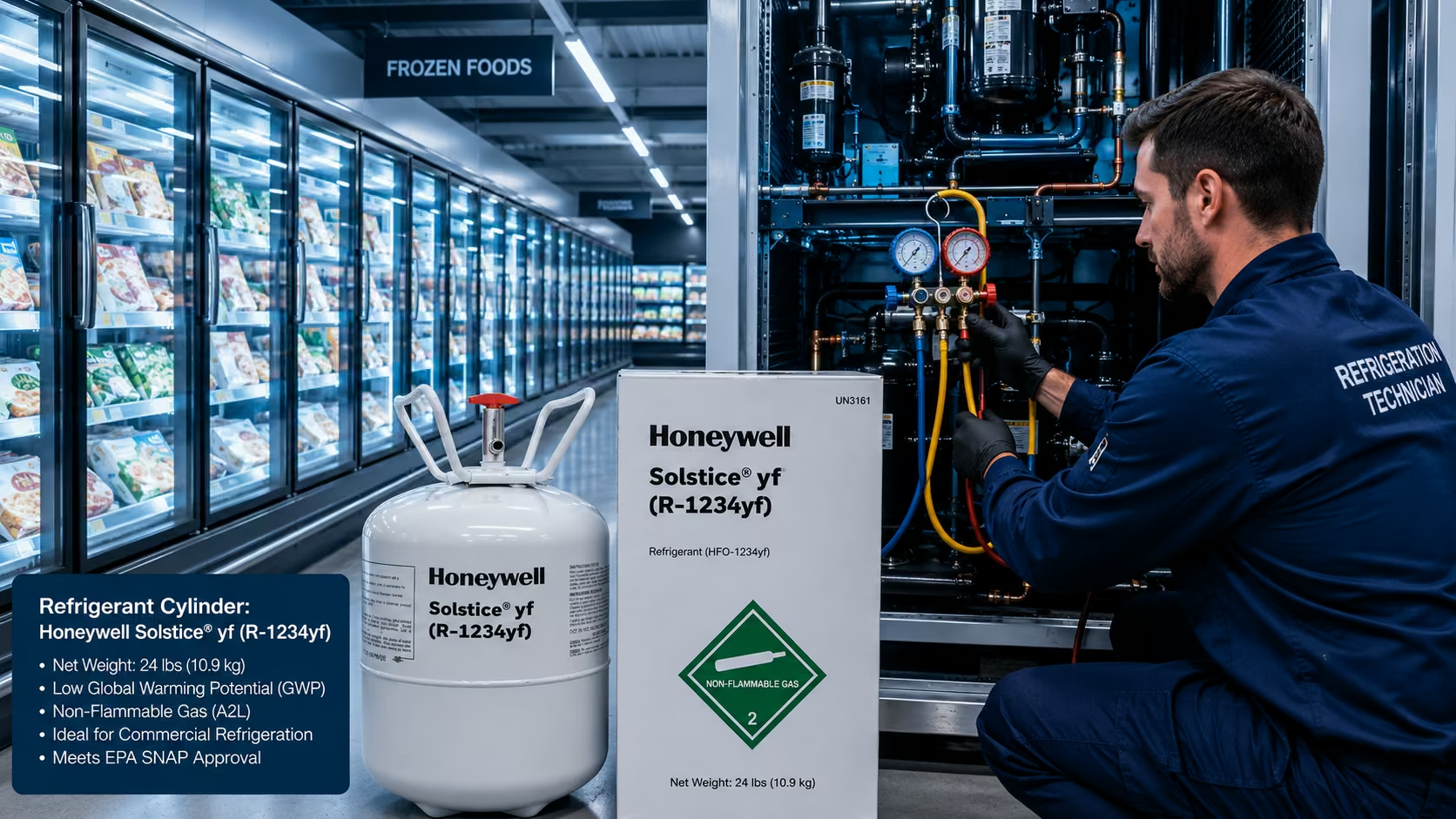
If a vehicle was manufactured in the United States after around 2017, there is a strong chance its air conditioning system uses R-1234yf refrigerant. This next-generation automotive refrigerant has replaced R-134a in virtually all new car production, and its presence in the service market is growing every year as the fleet of R-1234yf vehicles expands.
For automotive technicians and service shops, understanding R-1234yf is no longer optional it is essential for staying competitive in today’s auto service market. This guide covers seven essential facts about R-1234yf that every mechanic and AC technician needs to know.
What Is R-1234yf and Why Did Cars Switch to It?
R-1234yf (chemical name: 2,3,3,3-tetrafluoropropene) is a hydrofluoroolefin (HFO) refrigerant developed by Honeywell and DuPont (now Chemours). It was specifically designed as a replacement for R-134a in automotive air conditioning systems, driven by European Union regulations that required passenger vehicles to use refrigerants with a GWP below 150.
R-1234yf has a Global Warming Potential of just 4 compared to R-134a’s GWP of 1,430. This dramatic reduction (more than 99% lower) makes it one of the most environmentally friendly refrigerants available for mobile air conditioning applications. It does not deplete the ozone layer, and its atmospheric lifetime is approximately 11 days compared to R-134a’s 14 years.
The Timeline of R-1234yf Adoption in the US
The transition to R-1234yf in the United States followed a less prescriptive path than in Europe. Rather than a regulatory mandate, the US transition was driven by voluntary industry adoption and the preferences of global automakers who were already manufacturing R-1234yf vehicles for the European market.
By 2017, many major automakers had switched their US-market vehicles to R-1234yf. By 2021, virtually all new passenger cars and light trucks sold in the United States used R-1234yf as the factory refrigerant. The fleet transition is ongoing, and as older R-134a vehicles are retired and replaced, the R-1234yf service market grows proportionally larger each year.
How R-1234yf Differs from R-134a Chemically
Both R-1234yf and R-134a are fluorinated refrigerants, but their chemical structures are meaningfully different. R-134a is an HFC (hydrofluorocarbon) with the formula CH₂FCF₃. R-1234yf is an HFO (hydrofluoroolefin) with the formula CH₂=CFCF₃. The double bond in the HFO structure is what gives it a much shorter atmospheric lifetime and dramatically lower GWP.
The practical performance differences between the two refrigerants are relatively small. R-1234yf provides cooling capacity and coefficient of performance (COP) values that are close to R-134a in most operating conditions, which is why the transition to R-1234yf did not require major redesign of automotive AC systems beyond material compatibility adjustments.
Fact 1 – R-1234yf Is an A2L Refrigerant with Special Safety Considerations
R-1234yf carries an A2L safety classification low toxicity, mildly flammable. This is different from R-134a’s A1 classification (non-flammable), and it has important implications for how technicians must handle R-1234yf during service.
The flammability of R-1234yf is minimal under most conditions. Its lower flammability limit (LFL) is 6.2% by volume, and its burning velocity is very low (less than 10 cm/s). In practice, this means that accidental ignition from a small leak is unlikely. However, a large leak near an ignition source such as a hot engine surface can ignite under specific conditions.
What Automakers Did to Address the A2L Risk
Vehicle manufacturers designed R-1234yf systems with safety features that mitigate the A2L risk in the vehicle environment. These include thermal protection systems near the compressor, refrigerant routing that minimizes proximity to hot surfaces, and leak detection systems in some models that alert the driver to significant refrigerant loss.
Automotive AC systems using R-1234yf also use smaller refrigerant charge sizes compared to some older R-134a systems, which reduces the potential quantity of refrigerant available for release in a leak event. The overall safety record of R-1234yf in automotive applications has been positive, and regulatory bodies globally have accepted it as a safe refrigerant for mobile use.
Safety Protocols for R-1234yf Service Work
Technicians servicing R-1234yf systems should follow specific safety protocols. These include ensuring adequate ventilation in the service area, keeping ignition sources away from service areas during refrigerant handling, using R-1234yf specific service equipment that cannot be accidentally connected to R-134a systems, and wearing appropriate PPE including eye protection.
The service equipment for R-1234yf is intentionally incompatible with R-134a equipment. Service ports, fittings, and manifold gauges for R-1234yf systems use different coupling sizes to prevent accidental cross-contamination. This built-in incompatibility is an important safety feature that technicians must understand and respect.
Fact 2 – R-1234yf Requires Dedicated, Specialized Service Equipment
Servicing R-1234yf automotive AC systems requires dedicated equipment that is different from the tools used for R-134a service. This represents an investment for service shops that may be transitioning from exclusively R-134a service, but it is an investment that pays off as the R-1234yf vehicle population grows.
The key pieces of equipment required include an R-1234yf AC service machine (recovery, recycling, and recharging unit), manifold gauges calibrated for R-1234yf pressure-temperature relationships, and R-1234yf refrigerant supply in appropriate quantities.
Why R-1234yf Service Machines Are Different
R-1234yf service machines are specifically designed to handle the A2L safety requirements of the refrigerant. They include leak-proof connections, integrated leak detection, and refrigerant management systems that prevent excessive release during service operations.
Importantly, R-1234yf service machines are hermetically sealed to prevent refrigerant contact with potential ignition sources in the machine itself. They are also designed to accurately charge the precise quantities specified by the vehicle manufacturer, which is important because R-1234yf systems are typically very sensitive to over or under-charging.
Investment Justification for R-1234yf Equipment
The initial cost of R-1234yf service equipment is higher than equivalent R-134a equipment. However, the business case for the investment is clear: without this equipment, a shop cannot service R-1234yf vehicles. As the R-1234yf fleet grows, shops without the equipment will turn away an increasing number of customers.
For shops that service multiple vehicles per week, the equipment investment typically pays back within one to two seasons through the revenue generated from R-1234yf AC service work. Shops that delay the investment risk losing customers to competitors who are already equipped to serve them.
Fact 3 – Genuine Honeywell R-1234yf Quality Matters Enormously
The quality of R-1234yf refrigerant used in automotive service has a direct impact on system performance, warranty compliance, and equipment longevity. The market for R-1234yf has unfortunately attracted some counterfeit and substandard products, making supplier selection critically important.
Honeywell co-invented R-1234yf and remains one of the world’s largest producers. Honeywell’s Solstice YF brand R-1234yf is considered the benchmark for quality in the market. It meets AHRI 700 purity standards and comes with full regulatory documentation.
The Risks of Counterfeit or Substandard R-1234yf
Counterfeit R-1234yf can contain incorrect refrigerant blends, contaminants, or even completely different refrigerants sold under the R-1234yf label. Using counterfeit refrigerant in a customer’s vehicle can cause compressor damage, seal degradation, oil contamination, and system failures that result in expensive warranty claims and damaged customer relationships.
Substandard R-1234yf may appear to work initially but can cause problems over time. Contamination with moisture accelerates acid formation. Incorrect blend composition alters pressure-temperature relationships, making it impossible to charge the system correctly using standard service procedures.
How to Verify R-1234yf Authenticity
When purchasing R-1234yf, technicians should buy from reputable suppliers who can demonstrate product authenticity. Key indicators of genuine product include factory-sealed cylinders with intact tamper-evident seals, clear Honeywell or Chemours branding, lot numbers traceable to the manufacturer, and DOT certification markings on the cylinder.
SmartRefrigerants.com sells genuine Honeywell R-1234yf in 8oz cans (with brass can taps), 10lb cylinders, and other sizes. All products are factory sealed, EPA compliant, and come with documentation confirming authenticity and purity. For R-1234yf automotive service, visit SmartRefrigerants to order genuine Honeywell product with fast shipping.
Fact 4 – Vehicle Compatibility and Identification for R-1234yf
Not every vehicle uses R-1234yf. The transition from R-134a to R-1234yf happened over several years, and there are still millions of R-134a vehicles in operation. The critical first step in any automotive AC service is identifying the correct refrigerant for the vehicle being serviced.
Misidentification and the consequent use of the wrong refrigerant can cause serious system damage and liability issues. Using R-134a in an R-1234yf system or vice versa causes compressor damage, seal degradation, and system contamination. The physical incompatibility of service fittings provides one protection against accidental mixing, but technicians must still verify refrigerant type before beginning service.
How to Identify the Refrigerant Type in Any Vehicle
The most reliable way to identify the refrigerant type in a vehicle is to check the underhood refrigerant label, which is typically located on the AC compressor or on the underside of the hood. This label specifies the refrigerant type and the factory charge weight in ounces or grams.
For vehicles where the label is missing or illegible, the service port fitting size provides a second identification method. R-1234yf systems use a unique service port size that physically prevents connection of R-134a service equipment. If R-134a service equipment cannot connect, the vehicle almost certainly uses R-1234yf.
Common R-1234yf Vehicle Models
Most passenger vehicles sold in the US from approximately 2017 onward use R-1234yf. This includes virtually all current models from Ford, GM, Toyota, Honda, BMW, Mercedes-Benz, Volkswagen, Hyundai, Kia, and other major manufacturers. Some manufacturers switched earlier Chevrolet Spark, for example, used R-1234yf as early as 2013.
Older vehicles generally those manufactured before 2017 typically use R-134a, though there are exceptions in both directions. Always verify with the vehicle’s refrigerant label rather than assuming based on model year.
Fact 5 – Charging Procedures for R-1234yf Systems
Accurate charging is more critical for R-1234yf systems than for older R-134a systems. Vehicle manufacturers specify charge weights in grams (or ounces) for a reason R-1234yf systems are designed to operate within a narrow refrigerant charge range. Over-charging or under-charging by as little as 10% can noticeably affect cooling performance and compressor longevity.
The correct charge weight is specified on the underhood refrigerant label and in the vehicle’s service manual. Always use the manufacturer-specified charge weight as the starting point for any R-1234yf service.
Using Service Machine Features for Accurate Charging
Modern R-1234yf AC service machines include automatic weighing and dispensing systems that accurately deliver the specified refrigerant charge. These systems reduce the risk of human error and ensure repeatable, accurate results.
After recovery and evacuation, the service machine pulls the system down to the target vacuum level, then automatically dispenses the specified charge weight with precision. This automated approach is significantly more reliable than manual charging procedures and is the recommended method for R-1234yf service.
What to Check If R-1234yf System Performance Is Poor
If an R-1234yf AC system is not cooling effectively despite a correct refrigerant charge, the problem may be elsewhere in the system. Common causes of poor cooling performance include cabin air filter blockage, condenser coil fouling, blend door actuator failure, compressor clutch issues, or electronic control system faults.
A systematic diagnostic approach that checks all system components not just refrigerant charge gives technicians the best chance of identifying the actual problem quickly. Many R-1234yf system faults can be diagnosed using the vehicle’s OBD-II diagnostic system, which provides fault codes and live data for AC system components.
Fact 6 – The Growing Market for R-1234yf Service
The automotive R-1234yf service market is growing year over year as more R-1234yf vehicles enter the service age range. Vehicles typically require AC service between 5 and 10 years after manufacture, as refrigerant slowly permeates through seals and hoses. This means the R-1234yf service market will continue expanding for years.
Shops that are already equipped and experienced with R-1234yf service are capturing this growing market. Those that are not equipped are sending R-1234yf customers to competitors. The cost of not investing in R-1234yf capability is measured in lost revenue every service season.
Pricing R-1234yf AC Service Work
R-1234yf refrigerant has historically been more expensive than R-134a, reflecting its more complex manufacturing process and the specialty market for it. However, as production scales and competition increases, prices have been trending downward. Shops should price R-1234yf service work to reflect actual refrigerant costs plus appropriate labor charges.
Transparently communicating the cost difference between R-134a and R-1234yf service to customers and explaining why R-1234yf is used in their vehicle helps manage price sensitivity. Most customers understand when given a clear explanation that their vehicle requires a specific refrigerant for proper operation.
Building R-1234yf Service Capability in Your Shop
Transitioning a shop to offer R-1234yf service involves three main investments: equipment (the AC service machine), training (technician certification and procedures), and supply (genuine R-1234yf refrigerant from a reliable supplier). Each of these investments is manageable individually and collectively positions the shop to capture the growing R-1234yf market.
SmartRefrigerants.com provides genuine Honeywell R-1234yf in the quantities that automotive service shops need from small-quantity 8oz can packs with brass hardware for occasional service to 10lb cylinders for higher-volume operations.
Fact 7 – Handling and Storing R-1234yf Cylinders Safely
Proper handling and storage of R-1234yf cylinders is essential for safety and product quality. The A2L flammability classification requires additional attention to storage conditions beyond what is typical for A1 refrigerants like R-134a.
Store R-1234yf cylinders upright in a cool, well-ventilated area away from heat sources, open flames, electrical panels, and other potential ignition sources. Ensure that storage areas have adequate ventilation to prevent refrigerant accumulation in the event of a small leak.
Transport Precautions for R-1234yf
When transporting R-1234yf cylinders, keep them secured to prevent rolling or tipping. DOT regulations for hazardous material transport apply cylinders must be properly labeled and secured in accordance with DOT requirements. Do not transport cylinders in the passenger compartment of a vehicle.
For service vans carrying R-1234yf as working inventory, ensure adequate ventilation in the cargo area and secure cylinders so they cannot shift during transport. This is good practice for all refrigerant cylinders, with particular importance for A2L products.
Handling Small R-1234yf Cans vs. Bulk Cylinders
For shops that service only a few R-1234yf vehicles per month, small-quantity 8oz cans provide a cost-effective supply option. The Honeywell 8oz R-1234yf cans with HD brass can taps available from SmartRefrigerants.com are popular with smaller shops and mobile AC technicians.
Higher-volume shops benefit from the cost efficiency of 10lb cylinders, which reduce per-ounce cost and minimize the frequency of reordering. Both formats are genuine Honeywell product meeting the same quality standards, with the cylinder format being more economical for higher service volumes.
8 Frequently Asked Questions About R-1234yf
Q1: What vehicles use R-1234yf?
Most passenger cars and light trucks manufactured in the US from approximately 2017 onward use R-1234yf. Many vehicles from 2013-2016 also use it. Always check the underhood refrigerant label to confirm.
Q2: Can I mix R-1234yf with R-134a?
Absolutely not. Mixing these refrigerants contaminates the system and requires complete system flush and recharge. The physical service fittings are different to prevent accidental mixing.
Q3: Why is R-1234yf more expensive than R-134a?
R-1234yf is a more complex chemical compound with a more specialized manufacturing process. As production scales with growing demand, prices have been gradually decreasing.
Q4: Is R-1234yf dangerous to work with?
With proper training and equipment, R-1234yf is safe to work with. Its A2L classification means mild flammability, which is managed through proper ventilation and avoiding ignition sources near service areas.
Q5: Do I need special equipment to service R-1234yf?
Yes. Dedicated R-1234yf AC service machines, manifold gauges, and refrigerant supply are required. The service equipment is physically incompatible with R-134a equipment by design.
Q6: How do I know if an R-1234yf system is fully charged?
Use the manufacturer-specified charge weight (in grams or ounces) from the underhood label or service manual. A properly calibrated AC service machine dispenses the correct amount automatically.
Q7: Can I convert a vehicle from R-134a to R-1234yf?
No. Retrofitting a vehicle designed for R-134a to use R-1234yf is not practical or safe. Each vehicle system is designed for a specific refrigerant.
Q8: Where can I buy genuine Honeywell R-1234yf?
SmartRefrigerants.com sells genuine Honeywell R-1234yf in 8oz can packs (3 or 4 can kits with brass hardware) and 10lb cylinders, with fast nationwide shipping and EPA compliance documentation.
Conclusion
R-1234yf is the present and future of automotive air conditioning refrigerant. Its ultra-low GWP, proven performance, and growing vehicle fleet make it one of the most important products in the automotive service market today.
Shops and technicians who invest in R-1234yf knowledge, equipment, and supply relationships position themselves to capture a growing market while providing their customers with the highest quality service. For genuine Honeywell R-1234yf in the quantities your shop needs, visit SmartRefrigerants and order with confidence today.