

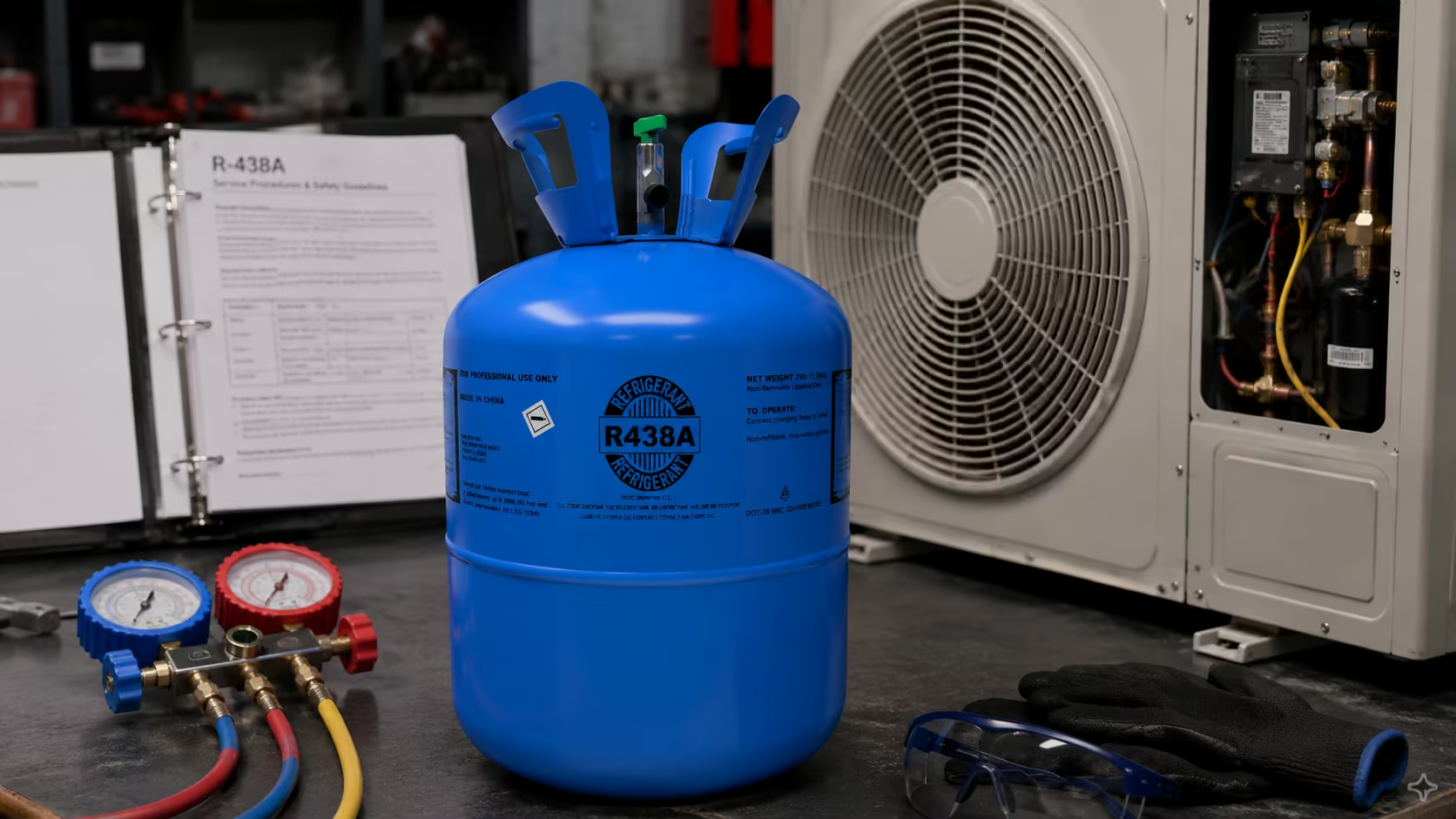
HVAC technicians across the US face a challenge every time they encounter a legacy R-22 system. The customer needs cooling. The equipment still works. But R-22 is expensive, increasingly scarce, and heavily regulated. A retrofit to a modern refrigerant is the right answer but which refrigerant, and how much work is involved? For many situations, the answer to both questions is R-438A.
R-438A, commercially known as MO99 (developed by Honeywell), is widely regarded as the most convenient retrofit refrigerant for R-22 systems. Its defining advantage is simple: in most cases, it does not require an oil change. While other R-22 alternatives like R-407C need a complete mineral oil flush and POE oil conversion, R-438A is miscible with both mineral oil and alkylbenzene oil already present in R-22 systems. This dramatically reduces retrofit labor costs and completion time. This guide covers everything technicians need to know about R-438A.
What Is R-438A (MO99) Refrigerant?
R-438A is a proprietary blend composed of five components: R-32 (8.5%), R-125 (45%), R-134a (44.2%), R-600 (0.6%), and R-601a (1.7%). The small amounts of R-600 (butane) and R-601a (isopentane) are what give R-438A its unique oil miscibility these components improve the refrigerant’s ability to remain mixed with mineral and alkylbenzene oil, allowing the existing lubricant to circulate effectively through the system even after switching refrigerants.
The GWP of R-438A is 2,265, which is comparable to R-22 but higher than some newer alternatives. As of January 1, 2026, California has banned the sale of virgin R-438A due to its GWP. Technicians and distributors operating in California should review CARB guidelines carefully. Outside California, R-438A remains widely available and legally usable for R-22 system retrofits. Smart Refrigerants carries R-438A in DOT-compliant cylinders for service professionals across the US.
The Significance of “No Oil Change Required”
The practical importance of the “no oil change required” feature of R-438A cannot be overstated. Converting an R-22 system to R-407C requires multiple oil flush cycles, each of which involves adding POE oil, running the system, recovering the refrigerant, draining the oil, and repeating. This process can take several hours and requires additional materials. For a high-volume service company handling dozens of R-22 retrofits, the time savings with R-438A are substantial.
More importantly, the no-oil-change characteristic reduces the risk of retrofit complications. POE oil is hygroscopic and must be handled carefully to prevent moisture contamination. Each system opening during the oil flush process introduces a risk of moisture ingress. R-438A eliminates these additional system openings, reducing the risk profile of the retrofit while also reducing labor costs. The result is a faster, simpler service call with less potential for complications.
Safety Classification of R-438A
R-438A carries an ASHRAE A1 safety classification low toxicity and non-flammable. This is the same classification as R-22, which means technicians transitioning from R-22 service to R-438A service do not need to learn new safety handling procedures for flammability. Standard refrigerant safety practices recovery before opening any system, proper PPE, good ventilation apply as they always have.
The small amounts of R-600 and R-601a in the blend are technically flammable hydrocarbons, but they are present in concentrations too low to affect the overall A1 classification of the blend under ASHRAE Standard 34. The blend’s flammability properties are determined by the full formulation, not individual components.
R-438A Retrofit Procedure: How to Convert an R-22 System
The R-438A retrofit procedure is straightforward compared to other R-22 alternatives. Begin by fully recovering all R-22 from the system using an EPA-approved recovery machine. The recovered R-22 must be stored in approved recovery cylinders and sent to a certified reclaim facility. Never vent R-22 it is a controlled Class II ozone-depleting substance under the Clean Air Act.
After recovery, inspect the system thoroughly. Check all electrical components, check the compressor amperage draw, inspect the metering device, and evaluate the condition of all system components. If the compressor is weak or other components show significant wear, it may be more cost-effective to replace the equipment rather than retrofit it. Retrofitting a failing system simply delays the inevitable and may result in a callback for the technician.
Charging R-438A into an R-22 System
Technicians should evacuate the system to at least 500 microns after recovery. A deep vacuum ensures that technicians remove all moisture and non-condensable gases before introducing the new refrigerant. Technicians should use a vacuum gauge (not a manifold gauge) to verify the vacuum level. Holding the vacuum for at least 30 minutes with the vacuum pump off confirms the system has no leaks.
Technicians should charge R-438A from the liquid phase of the cylinder. Like most multi-component blends, technicians should charge R-438A as a liquid to maintain blend consistency. Most R-438A cylinders include a dip tube for liquid charging. Technicians should weigh in approximately 90–95% of the original R-22 charge weight as a starting point, then adjust based on system operating conditions. Technicians should not simply charge to a pressure specification; they should always charge by weight and then fine-tune based on superheat and subcooling measurements.
Metering Device Considerations for R-438A
In most R-22 systems, the existing TXV (thermostatic expansion valve) or fixed orifice works acceptably with R-438A without replacement. If the system has a TXV, technicians should verify that the superheat setting is appropriate for R-438A and adjust it if needed. The target superheat for R-438A is generally similar to that used for R-22, but technicians should consult manufacturer documentation for the specific retrofit product.
For systems with orifice tubes or capillary tubes, the fixed metering may cause slightly different superheat conditions with R-438A compared to R-22. Monitor system performance carefully after charging and make any needed adjustments to ensure adequate superheat to protect the compressor without excessively limiting capacity.
Performance Comparison: R-438A vs R-22 in Existing Systems
Technicians converting R-22 systems to R-438A can expect performance that closely matches the original R-22 system in most residential and light commercial applications. Cooling capacity with R-438A typically reaches 95–100% of the original R-22 capacity, and efficiency remains comparable. These performance levels suit existing equipment that technicians sized and designed for R-22 loads.
Operating pressures with R-438A remain close to R-22 pressures, with slight variations that stay within normal operating ranges. The familiarity of the pressure-temperature relationship helps technicians who are experienced with R-22 service. Technicians can apply standard R-22 service procedures relatively well to R-438A, with the key differences being the no-oil-change approach and the liquid charging requirement.
Comparing R-438A to Other R-22 Retrofit Options
Several refrigerants serve as R-22 alternatives: R-407C, R-422D, R-422B, R-427A, R-438A, and others. Among these, R-438A stands out for ease of use in field retrofits. Its no-oil-change feature makes it the preferred choice for residential split systems and many commercial applications where minimizing service time and cost is important.
R-407C may be preferred when a system is being comprehensively serviced and the opportunity to do a thorough oil flush is present, or when the equipment is specifically designed for R-407C. R-438A is generally the better choice for quick retrofits where minimizing system downtime and service labor is the priority. Smart Refrigerants stocks both options R-438A and R-407C for contractor flexibility.
Compliance and California Restrictions on R-438A
California restricts R-438A effective January 1, 2026. California prohibits the sale of virgin R-438A due to its high GWP. Contractors and distributors in California should ensure compliance with CARB regulations and explore alternative retrofit refrigerants with lower GWP for new applications in that state.
Outside California, R-438A remains fully legal and available. The EPA approves it for use as an R-22 retrofit refrigerant and it meets all federal regulatory requirements. Contractors working in states other than California can continue purchasing and using R-438A for R-22 system retrofits without restriction.
8 Frequently Asked Questions About R-438A Refrigerant
Q1: Does R-438A really not require an oil change?
In most R-22 systems using mineral oil or alkylbenzene oil, R-438A does not require an oil change. This is because R-438A contains R-600 and R-601a components that maintain miscibility with the existing oil. This is one of R-438A’s primary advantages over other R-22 retrofit refrigerants.
Q2: How much R-438A should be charged into an R-22 system?
A good starting point is 90–95% of the original R-22 charge weight. Fine-tune based on system operating conditions, particularly superheat and subcooling measurements. Always charge by weight, not pressure.
Q3: Is R-438A available in California?
As of January 1, 2026, the sale of virgin R-438A is restricted in California due to its GWP. Check with your local distributor and review current CARB guidelines for California-specific options.
Q4: What safety class is R-438A?
R-438A is classified as A1 non-flammable and low toxicity. No special flammability handling equipment is required compared to standard HFC refrigerant service practices.
Q5: Can R-438A be used in commercial refrigeration systems?
R-438A is primarily used in residential and commercial HVAC systems originally designed for R-22. Its performance characteristics make it most suitable for comfort cooling rather than low-temperature commercial refrigeration.
Q6: How does R-438A compare to R-407C for R-22 retrofits?
The main advantage of R-438A over R-407C is that R-438A typically does not require an oil change, while R-407C requires a complete mineral oil flush and POE oil replacement. R-438A retrofits are faster and simpler as a result.
Q7: What is the GWP of R-438A?
R-438A has a GWP of approximately 2,265. This is comparable to many other HFC refrigerants in service use, though lower-GWP alternatives are increasingly being specified in new applications.
Q8: Where can I buy R-438A refrigerant?
Smart Refrigerants offers R-438A in DOT-approved, EPA-compliant cylinders with fast shipping to HVAC contractors and refrigeration professionals across the United States. Contact Smart Refrigerants for current pricing and availability.
Conclusion
R-438A (MO99) earns its reputation as one of the most contractor-friendly R-22 retrofit refrigerants on the market. The no-oil-change advantage saves hours of labor per retrofit, reduces complication risk, and delivers performance that closely matches the original R-22 system. For technicians managing large numbers of legacy R-22 retrofits, R-438A is frequently the most efficient and cost-effective option available.
Smart Refrigerants supplies R-438A refrigerant in DOT-compliant cylinders for HVAC contractors and refrigeration professionals across the US. Pair this refrigerant with solid technical knowledge and a thorough retrofit procedure, and customers will enjoy reliable cooling from their legacy systems for years to come.