

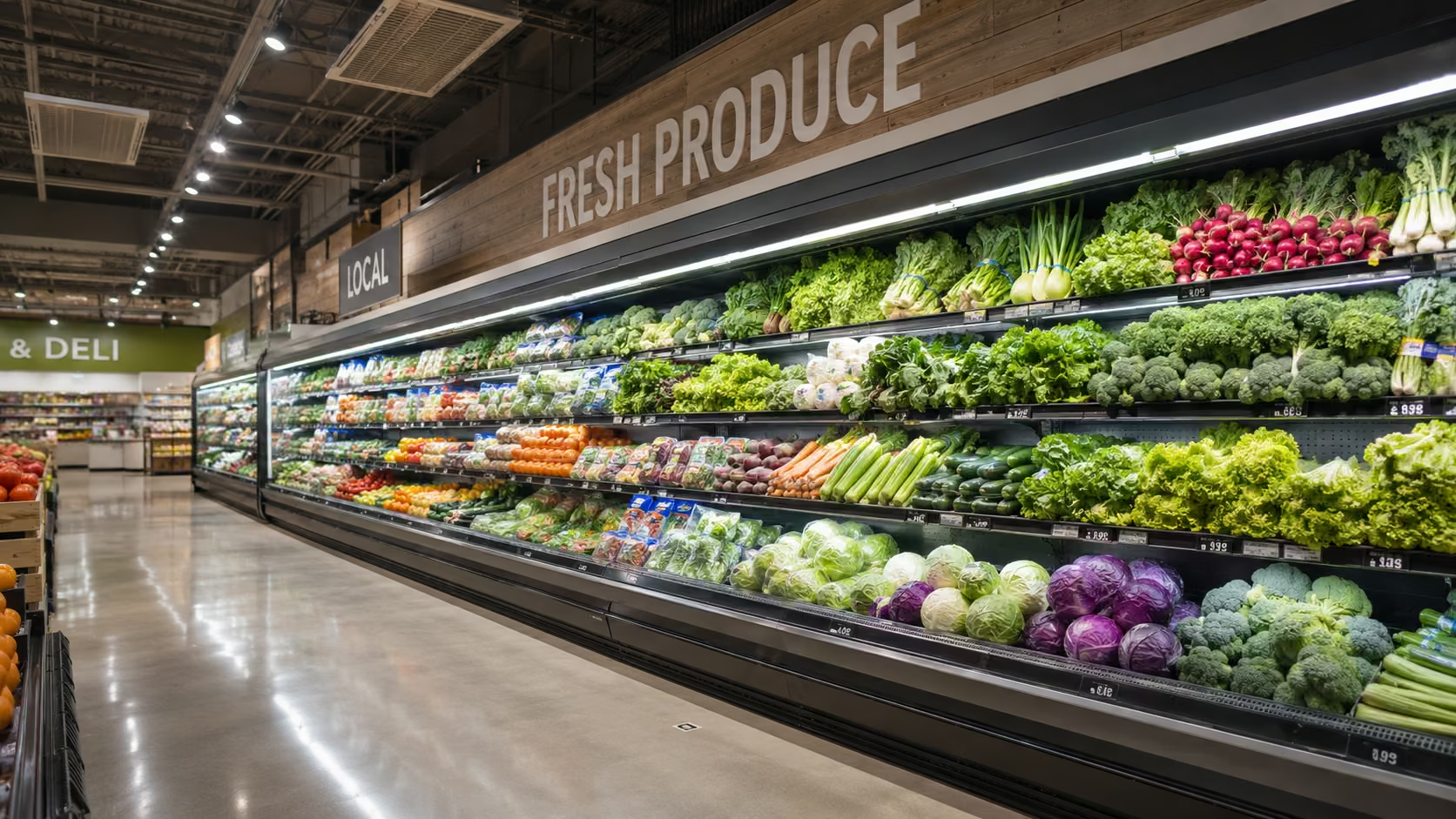
A restaurant that loses its walk-in cooler on a Friday night faces thousands of dollars in spoiled food and a shutdown until repairs are complete. A supermarket with a failing refrigeration rack compromises its entire frozen food section. A pharmaceutical cold chain facility with an unreliable refrigeration system risks product losses measured in millions. In commercial refrigeration, the stakes are always high. Choosing the right system and the right refrigerant from the beginning reduces failure risk, operating costs, and long-term compliance burden.
Commercial refrigeration solutions span a huge range of applications, system sizes, and refrigerant options. Understanding the landscape is essential for food service operators, facility managers, food retailers, cold chain logistics companies, and the HVAC/R contractors who design and service these systems. This guide covers the major system types, the refrigerants best suited to each application, and the key factors that drive the selection decision.
Types of Commercial Refrigeration Systems
Commercial refrigeration systems can be broadly categorized into self-contained systems, remote systems, and centralized rack systems. Each type has distinct characteristics that make it suitable for specific applications.
Self-contained units include reach-in coolers, under-counter refrigerators, and some display cases where manufacturers build the compressor and condensing unit into the equipment itself. These systems are simple, easy to install, and suit small-volume applications. Their main limitation is heat rejection the compressor generates heat that releases directly into the service area, which can add to cooling loads in kitchens and small stores.
Remote Condensing Unit Systems
Remote systems separate the compressor and condenser from the cooled space. The condensing unit is located outside the building or in a dedicated mechanical room, and refrigerant lines connect it to the evaporator coils in the refrigerated space. Remote systems provide better heat management, lower operating temperatures in the service area, and easier access for service and maintenance. They are appropriate for walk-in coolers, medium-sized cold storage applications, and small supermarkets with a limited number of refrigerated cases.
The refrigerants used in remote condensing unit systems vary by application temperature. For medium-temperature applications (0°C to 10°C or 32°F to 50°F), R-134a, R-513A, R-407C, and R-448A are common choices. For low-temperature applications (below 0°C or 32°F), R-404A, R-407A, R-407F, R-452A, and R-448A are frequently used. Smart Refrigerants carries R-407A, R-452A, and R-448A for these applications.
Centralized Rack Systems for Supermarkets
The largest and most complex commercial refrigeration configuration is the centralized refrigeration rack system, used primarily in supermarkets and large food service operations. In a rack system, multiple compressors are piped together on a common rack. One rack typically serves all the cases in a temperature category (e.g., all medium-temperature cases or all frozen cases), with liquid refrigerant lines distributed throughout the store.
Rack systems offer excellent economy of scale and allow sophisticated controls to optimize energy efficiency and maintain precise temperatures across many individual display cases. They are, however, complex systems that require experienced technicians and comprehensive refrigerant management programs. The refrigerant charges in large rack systems can range from several hundred to several thousand pounds, making refrigerant management and leak prevention critically important.
Selecting the Right Refrigerant for Commercial Applications
The refrigerant selection for a commercial refrigeration system is driven by several factors: the required temperature range, regulatory status, safety classification requirements, equipment manufacturer approvals, environmental credentials, and total operating cost. No single refrigerant is optimal for all commercial refrigeration applications, which is why the market supports a diverse portfolio of refrigerant options.
For new equipment, specifying a lower-GWP refrigerant reduces future regulatory risk and aligns with corporate sustainability commitments. Engineers and designers increasingly specify R-448A and R-449A (both lower-GWP HFC/HFO blends) in new supermarket rack systems as lower-GWP alternatives to R-404A. For existing systems, the equipment’s current charge determines the service refrigerant, and evaluate retrofit options when refrigerant becomes expensive or unavailable.
Medium-Temperature Commercial Refrigeration
Medium-temperature commercial refrigeration maintains product temperatures between approximately 0°C and 8°C (32°F to 46°F). This range covers fresh produce, dairy, deli, beverages, and similar products. R-448A is emerging as a preferred refrigerant for medium-temperature commercial applications, offering lower GWP and good performance. R-134a and R-513A are also used in medium-temperature systems, with R-513A providing a lower-GWP alternative to R-134a.
R-407C serves in some medium-temperature commercial applications, particularly in regions and equipment categories where manufacturers adopted it as an R-22 replacement. The wide range of refrigerant options in the medium-temperature space gives specifiers and contractors flexibility to match the refrigerant to the equipment, regulatory environment, and environmental goals of the application.
Low-Temperature and Frozen Food Applications
Low-temperature commercial refrigeration maintains product temperatures at or below -18°C (0°F) for frozen food storage and display. This application places the most demanding thermodynamic requirements on the refrigerant and system. Historically, R-404A dominated this space due to its excellent low-temperature performance, but regulatory pressure is accelerating the transition to lower-GWP alternatives.
R-452A is the leading transport refrigeration alternative to R-404A (addressed in the R-452A article), while R-407A, R-407F, and R-448A serve the stationary low-temperature commercial market. For contractors servicing the frozen food supply chain, maintaining inventory of these refrigerants is essential for keeping cold chain equipment operational.
Energy Efficiency in Commercial Refrigeration
Energy efficiency is a major operating cost driver in commercial refrigeration. A typical supermarket spends 30–40% of its total electricity consumption on refrigeration. Choosing an energy-efficient system design and maintaining it properly has a direct and significant impact on operating profitability. Refrigerant selection affects energy efficiency through the refrigerant’s thermodynamic properties, which influence how efficiently the compression cycle moves heat.
Modern electronic expansion valves (EEVs), variable-speed compressors, and advanced controls dramatically improve the part-load efficiency of commercial refrigeration systems compared to older fixed-capacity equipment. These technologies are increasingly standard in new supermarket rack systems and high-efficiency remote condensing units. The combination of lower-GWP refrigerants and modern control systems can deliver both environmental and economic benefits simultaneously.
Refrigerant Management Programs for Commercial Facilities
Large commercial refrigeration operators particularly supermarket chains, food distribution companies, and pharmaceutical facilities implement formal refrigerant management programs to track refrigerant use, minimize leak rates, and ensure regulatory compliance. These programs include regular leak testing, tracking refrigerant additions, automatic leak detection systems, and refrigerant inventory management.
EPA Section 608 regulations require that facilities with refrigerant charges above specified thresholds maintain records of refrigerant additions and investigate excessive leak rates. Beyond minimum regulatory compliance, proactive refrigerant management programs typically pay for themselves through reduced refrigerant costs and extended equipment life. Smart Refrigerants supports commercial operators with quality refrigerant supply in the quantities needed for large-scale operations.
8 Frequently Asked Questions About Commercial Refrigeration Solutions
Q1: What refrigerant is used in most supermarkets today?
Most existing US supermarkets use R-404A or R-22 in their rack systems, though newer installations increasingly use lower-GWP alternatives like R-448A, R-449A, or R-407A. The specific refrigerant depends on when the store was built or last had its refrigeration system upgraded.
Q2: What is the difference between medium-temperature and low-temperature commercial refrigeration?
Medium-temperature systems maintain temperatures between 0°C and 10°C (32°F to 50°F), suitable for produce, dairy, and beverages. Low-temperature systems maintain temperatures at or below -18°C (0°F) for frozen food storage.
Q3: How often does commercial refrigeration equipment need refrigerant service?
Properly maintained commercial refrigeration systems should have minimal refrigerant leakage. Annual leak checks are recommended for systems above 50 lbs of refrigerant charge. Excessive refrigerant additions indicate a leak that must be found and repaired.
Q4: What refrigerant is replacing R-404A in commercial refrigeration?
R-448A and R-449A are the most widely adopted replacements for R-404A in stationary commercial refrigeration, and they offer lower GWP with similar performance. R-452A serves as the preferred option for transport refrigeration.
Q5: Are natural refrigerants like CO2 or ammonia used in commercial refrigeration?
Q6: What is a refrigeration rack system?
A refrigeration rack system is a centralized commercial refrigeration configuration where multiple compressors on a common frame serve many individual display cases throughout a store. Rack systems are standard in supermarkets and large food retail operations.
Q7: Does commercial refrigeration equipment require EPA certification to service?
Yes. Technicians who service commercial refrigeration equipment containing regulated refrigerants must hold EPA Section 608 certification. The Type II or Universal certification covers most commercial refrigeration equipment.
Q8: Where can I buy refrigerants for commercial refrigeration in bulk?
Smart Refrigerants supplies commercial refrigerants including R-407A, R-452A, R-448A, R-404A, R-407C, and others in 25lb cylinders with fast shipping. Bulk orders for large commercial operations are available contact Smart Refrigerants for volume pricing.
Conclusion
Selecting the right commercial refrigeration solution system type, design, and refrigerant is one of the most consequential decisions a food service operator, facility manager, or HVAC/R contractor makes. The right choice delivers reliable temperature control, regulatory compliance, energy efficiency, and manageable operating costs for the life of the equipment. The wrong choice creates ongoing problems with performance, maintenance, and compliance that compound over time.
Smart Refrigerants is a complete source for the commercial refrigeration refrigerants that keep these systems running. From R-407A for low-temperature rack systems to R-452A for transport refrigeration and R-448A for modern supermarket applications, quality refrigerant supply is a foundation for successful commercial refrigeration service.