

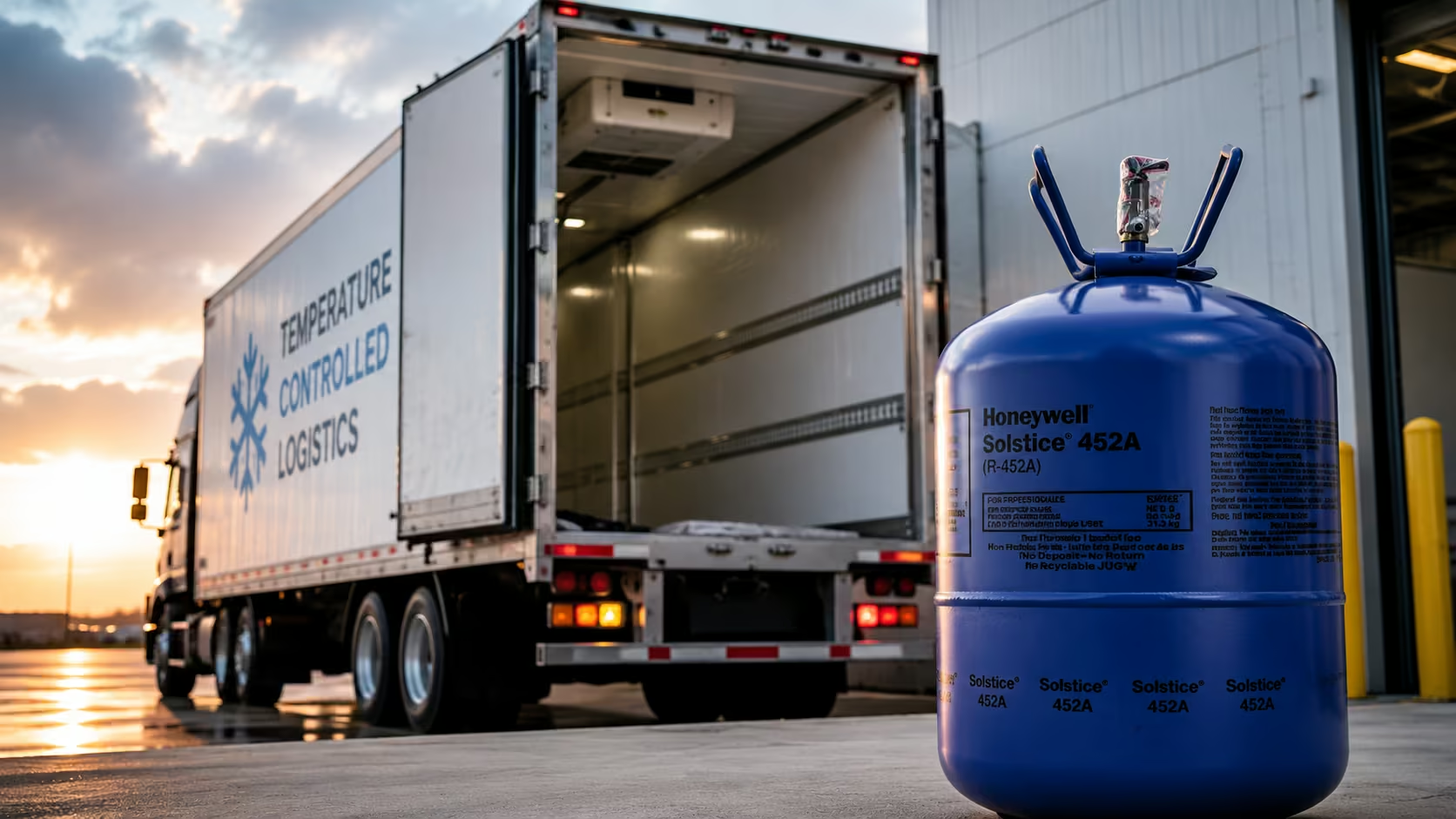
R-452A Refrigerant: The Smart Choice for Transport Refrigeration
The transport refrigeration industry moves food, medicine, and temperature-sensitive goods across thousands of miles every day. The refrigerant powering those systems has massive environmental implications billions of pounds of cargo, millions of transport units, and refrigerants that, if released, contribute significantly to climate change. For years, R-404A was the dominant refrigerant in transport refrigeration. That is changing fast.
R-452A (marketed as Opteon XP44 by Chemours and available as a Honeywell virgin-grade product) was specifically developed to replace R-404A in transport refrigeration and low-temperature commercial cooling. It offers dramatically lower global warming potential while maintaining the performance characteristics that transport refrigeration systems demand. This guide covers everything fleet operators, transport refrigeration technicians, and HVAC/R professionals need to know about R-452A.
What Is R-452A and How Was It Developed?
R-452A is a ternary HFO/HFC refrigerant blend containing R-32 (11% by weight), R-125 (59%), and HFO-1234yf (30%). Engineers developed R-452A specifically to reduce the environmental footprint of transport refrigeration and low-temperature commercial systems while maintaining performance comparable to R-404A. Engineers designed the blend to work in existing R-404A equipment with minimal modifications in many cases, though a complete compatibility assessment is always required.
The GWP of R-452A is 2,140, compared to R-404A’s GWP of 3,922. This represents a 45% reduction in GWP. While 2,140 still ranks high under emerging regulatory standards, it represents a significant improvement over the system it replaces and provides a compliance pathway for fleets that must reduce their environmental impact under current and near-term regulations.
R-452A Safety Classification
R-452A carries an ASHRAE A1 safety classification non-flammable and low toxicity. ASHRAE assigns this same classification to R-404A, which makes the transition from R-404A to R-452A operationally familiar for technicians who are already trained and equipped for R-404A service. Technicians do not need any additional specialized flammability handling equipment compared to current R-404A practices.
The A1 classification is particularly important for transport refrigeration applications where equipment operates in confined vehicle cargo areas and service depots. The non-flammable nature of R-452A allows technicians to adapt existing safety protocols for R-404A service for use in R-452A service without requiring fundamental changes to depot safety practices, though technicians should always review refrigerant-specific safety data sheets.
The Role of HFO-1234yf in R-452A
The 30% HFO-1234yf component is what gives R-452A its significantly lower GWP compared to R-404A. HFO refrigerants have an extremely short atmospheric lifetime (measured in days rather than years), which results in very low GWP values. By incorporating HFO-1234yf into the blend alongside R-32 and R-125, the formulators were able to achieve a meaningful GWP reduction while maintaining the thermodynamic performance required for low-temperature applications.
The HFO content also means that R-452A requires handling practices appropriate for a zeotropic blend. Like other multi-component blends, technicians must charge R-452A from the liquid phase to ensure consistent blend composition. Cylinder orientation and liquid charging are critical to system performance and technician training for any depot transitioning to R-452A should specify these requirements.
Performance Comparison: R-452A vs R-404A
R-452A is designed to deliver performance very close to R-404A in most transport refrigeration applications. Independent testing by major transport refrigeration equipment manufacturers, including Carrier Transicold and Thermo King, has demonstrated that R-452A provides capacity and efficiency within a few percent of R-404A under equivalent operating conditions. This close performance match is what makes R-452A the most popular R-404A alternative in transport refrigeration.
Operating pressures of R-452A are similar to those of R-404A, with slightly higher discharge temperatures in some conditions. This modest temperature increase is within the operating limits of most R-404A compressors, which is why many equipment manufacturers have approved R-452A as a service refrigerant for their existing R-404A equipment. Always verify manufacturer approval before converting any specific piece of equipment.
Temperature Range Capabilities
R-452A is optimized for low-temperature and medium-temperature transport refrigeration applications. It performs well at the setpoints typically required for frozen food transport (-20°C to -18°C or 0°F to -4°F) and chilled cargo (0°C to 4°C or 32°F to 39°F). This range covers the vast majority of temperature-controlled transport applications in the food supply chain.
For extreme low-temperature applications below -30°C (-22°F), technicians should carefully review equipment manufacturers’ performance data. While R-452A maintains functionality at these temperatures, capacity margins at extreme low temperatures may differ from R-404A, and technicians should factor this into route planning and cargo requirements for specialized operations.
Compressor Compatibility
Most modern transport refrigeration compressors that manufacturers designed for R-404A can operate with R-452A when technicians confirm the appropriate lubricant and when the equipment manufacturer approves the refrigerant. The slightly higher discharge temperatures associated with R-452A mean technicians should verify compressor discharge temperature limits for the specific unit they are converting.
Lubrication compatibility is a key consideration. R-452A requires POE oil compatible with both the HFC and HFO components of the blend. The existing POE oil in an R-404A system is generally compatible with R-452A, but the oil quantity and quality should be verified as part of any conversion procedure. Some manufacturers specify flushing the oil before introducing R-452A, particularly if the system has been in service for an extended period.
California Regulations and R-452A
California has been at the forefront of HFC regulation in the United States. The California Air Resources Board (CARB) has implemented regulations that restrict the use of high-GWP refrigerants in new equipment and, in some cases, existing equipment. For transport refrigeration, California regulations under the California Refrigerant Management Program set GWP limits for refrigerated transport vehicles operating in the state.
R-452A, with its GWP of 2,140, meets California’s current requirements for transport refrigeration applications as a lower-GWP alternative to R-404A. Fleets operating in California that are currently running R-404A should review CARB requirements and consider transitioning to R-452A. Smart Refrigerants offers Honeywell R-452A in 25lb virgin cylinders that meet all EPA and DOT compliance requirements.
National Regulatory Picture for R-452A
At the federal level, the EPA’s AIM Act authorizes the phase-down of HFCs based on GWP-weighted production and consumption. R-452A’s significantly lower GWP compared to R-404A supports its presence in the market, and EPA guidance on HFC transitions recognizes it as a lower-GWP alternative. Fleets that transition to R-452A make a proactive compliance move that aligns with both current regulations and anticipated future regulatory direction.
The Montreal Protocol’s Kigali Amendment, which the US ratified in 2022, commits the country to an 85% reduction in HFC consumption by 2036. This long-term trajectory means that even R-452A may eventually face phase-down pressure, but its lower GWP relative to R-404A gives it a significantly longer regulatory runway.
Converting a Transport Refrigeration System to R-452A
Converting a transport refrigeration unit from R-404A to R-452A begins with a thorough system assessment. Technicians must establish the age, condition, and manufacturer approval status of the unit before conversion. If a system shows significant mechanical wear or component damage, technicians should evaluate it for repair or replacement rather than a simple refrigerant conversion.
The conversion procedure starts when technicians recover all R-404A from the system using an EPA-approved recovery machine capable of handling R-404A. Technicians must store the recovered refrigerant in approved recovery cylinders and send it to a certified reclaim facility for processing. Federal law prohibits releasing refrigerant to the atmosphere regardless of the refrigerant type.
Step-by-Step Conversion Process
After recovery, technicians should assess the oil condition. In most cases, the existing POE oil can remain in the system, but technicians must verify its level and quality. Technicians should thoroughly evacuate the system to 500 microns or better before charging. Technicians should charge R-452A as a liquid from the cylinder’s liquid valve or dip tube port.
The new charge weight for R-452A is typically similar to the R-404A charge it replaces, but the exact amount depends on the specific unit and manufacturer conversion guidance. Weigh in the refrigerant charge accurately using a calibrated refrigerant scale. After charging, run the system through several operating cycles and verify that suction pressures, discharge pressures, temperatures, and superheat/subcooling values are within specification.
8 Frequently Asked Questions About R-452A Refrigerant
Q1: Is R-452A a drop-in replacement for R-404A?
R-452A serves as a near drop-in replacement for R-404A in many transport refrigeration systems, with the same A1 safety classification and similar operating characteristics. However, always verify manufacturer approval for the specific equipment before converting.
Q2: What is the GWP of R-452A compared to R-404A?
R-452A has a GWP of 2,140, compared to R-404A’s GWP of 3,922. This represents a 45% reduction in global warming potential, which is why R-452A is the leading R-404A replacement in transport refrigeration.
Q3: Is R-452A approved for use in California?
Yes, R-452A meets California CARB requirements for transport refrigeration as a lower-GWP alternative to R-404A. Fleets operating in California should review current CARB regulations for their specific equipment category.
Q4: Does converting from R-404A to R-452A require an oil change?
In many cases, the existing POE oil in an R-404A system is compatible with R-452A and does not require complete replacement. However, technicians should always review oil condition, level, and manufacturer specifications as part of the conversion process.
Q5: What safety equipment is required for R-452A?
R-452A has an A1 safety classification (non-flammable, low toxicity), the same as R-404A. Standard refrigerant safety practices safety glasses, gloves, and proper ventilation apply.
Q6: Can R-452A be mixed with R-404A?
No. Mixing refrigerants creates off-specification blends with unpredictable properties. Technicians must completely recover All R-404A before introducing R-452A into any system.
Q7: Who manufactures R-452A?
R-452A (Opteon XP44) has Chemours as its primary manufacturer, and Honeywell also supplies it in virgin-grade cylinders under its brand. Smart Refrigerants supplies 25lb Honeywell R-452A cylinders with DOT and EPA compliance documentation.
Q8: Where can I buy R-452A refrigerant for transport refrigeration?
Smart Refrigerants offers Honeywell-branded virgin-grade R-452A in 25lb cylinders, DOT-approved and EPA-compliant, with fast shipping to transport refrigeration depots and HVAC/R suppliers across the United States.
Conclusion
R-452A refrigerant represents the most practical and widely adopted upgrade path from R-404A in transport refrigeration. Its 45% reduction in GWP, A1 non-flammable safety classification, and near-identical performance to R-404A make it the first choice for fleets looking to reduce their environmental impact while maintaining operational reliability. Regulatory pressure on R-404A will only increase, making the transition to R-452A a smart long-term business decision.
Smart Refrigerants stocks Honeywell R-452A in 25lb virgin cylinders that are DOT-approved and EPA-compliant, ready to support transport refrigeration conversions and service operations across the US. Stock the right refrigerant now and stay ahead of the regulatory curve.