

When the HVAC industry began phasing out R-22 (HCFC-22), contractors faced an immediate problem. Millions of existing split-system air conditioners were designed specifically for R-22. Replacement equipment was expensive. Customers wanted their systems to keep running. A retrofit refrigerant was needed one that would work in existing R-22 equipment with minimal modifications, provide reliable cooling performance, and meet regulatory requirements.
R-407C emerged as one of the most widely adopted answers to that challenge. It became the refrigerant of choice for R-22 replacement in split systems and heat pumps across Europe, Asia, and many other global markets. In the United States, it found a strong following among contractors managing the R-22 phase-out, and it continues to be used today in both retrofit applications and new equipment in certain markets. This guide provides a thorough look at R-407C its composition, performance characteristics, applications, and practical use.
What Is R-407C Refrigerant?
R-407C is a zeotropic blend of three HFC refrigerants: R-32 (23% by weight), R-125 (25%), and R-134a (52%). It was specifically formulated to have operating pressures and thermodynamic characteristics similar to R-22, which made it suitable for use in equipment originally designed for R-22 after appropriate retrofitting. The blend has zero ozone depletion potential, making it compliant with Montreal Protocol requirements.
The GWP of R-407C is 1,774, which is lower than R-410A’s GWP of 2,088 but higher than newer alternatives. Under current EPA AIM Act guidance, R-407C is not being targeted for near-term phase-down in the same manner as R-410A, giving it continued utility in service applications. It remains a viable option for technicians servicing existing R-407C-equipped systems.
The Zeotropic Blending Characteristics of R-407C
One of the most important technical characteristics of R-407C is its zeotropic nature. Unlike pure refrigerants or azeotropic blends, zeotropic blends have a temperature glide meaning the different components in the blend evaporate and condense at different temperatures. R-407C has a temperature glide of approximately 5–7°C (9–12.6°F) depending on conditions.
This temperature glide has important practical implications. When servicing an R-407C system, refrigerant must always be charged as a liquid (not vapor) from the cylinder. If vapor is charged, the lighter components (R-32 and R-125) enter the system first, leaving the cylinder enriched in R-134a. This changes the composition of the refrigerant in the system, altering performance and pressures in unpredictable ways. Always use a dip tube cylinder or charge from the bottom of the cylinder in liquid phase.
Lubricating Oil Compatibility
R-407C is compatible with POE (polyolester) lubricating oil. This is a critically important consideration for retrofit applications. Systems originally running on R-22 used mineral oil, which is not miscible with R-407C. Before retrofitting an R-22 system to R-407C, the old mineral oil must be flushed and replaced with POE oil. The number of oil flush cycles required varies by system design, and the manufacturer’s retrofit procedures must be followed carefully.
Incomplete oil conversion is one of the most common causes of premature compressor failure in retrofit applications. POE oil is hygroscopic (absorbs moisture from the atmosphere), so components and lines must be thoroughly evacuated before the new refrigerant and oil charge is introduced. A deep vacuum to 500 microns or better is recommended before charging.
Performance Characteristics of R-407C in Split Systems
R-407C provides cooling and heating performance that is comparable to R-22 in most split-system applications, though not identical. The capacity and efficiency of an R-407C system can vary slightly from an equivalent R-22 system depending on the specific equipment design, operating conditions, and the quality of the retrofit procedure performed.
In well-executed R-22 to R-407C retrofits, cooling capacity typically falls within 95–105% of the original R-22 system capacity. The energy efficiency ratio (EER) may differ slightly. These variations are acceptable for most residential and commercial applications, though they should be communicated to customers before a retrofit is performed so that expectations are properly set.
Operating Pressures of R-407C
The operating pressures of R-407C are close to those of R-22, which is why it was designed as a retrofit refrigerant. At a typical evaporating temperature of 5°C (41°F), R-407C has a saturation pressure of approximately 582 kPa (84 psi). At a condensing temperature of 45°C (113°F), the high-side pressure is approximately 1,898 kPa (275 psi). These pressures are compatible with R-22 system components, though age and condition of existing components must always be evaluated before a retrofit.
Technicians should note that the saturation temperatures indicated on standard pressure-temperature charts correspond to either the bubble point (liquid saturation) or dew point (vapor saturation) of R-407C. Using the correct reference point for system diagnosis is important. Most R-407C pressure-temperature charts clearly indicate which point is being referenced.
Heat Pump Applications with R-407C
R-407C works well in heat pump applications, providing both cooling and heating functionality. Its thermodynamic properties allow effective heat transfer in both heating and cooling modes across a reasonable range of outdoor temperatures. For climate zones where extreme cold is not a primary concern, R-407C-based heat pumps deliver reliable performance.
In colder climates where the heat pump must provide substantial heating at low outdoor temperatures, performance may be somewhat limited compared to R-410A or R-32 systems with advanced compressor technologies. Contractors selecting a refrigerant for a new heat pump installation in a cold climate should evaluate the specific equipment manufacturer’s performance data for the target operating conditions.
R-407C Retrofit Procedures: Step-by-Step Overview
Converting an R-22 system to R-407C requires following a defined procedure to ensure reliable operation. The process begins with a thorough evaluation of the existing system. All system components compressor, metering device, coils, line sets, and accessories must be assessed for condition and compatibility. Severely aged or corroded components should be replaced rather than retrofitted.
The existing R-22 must be properly recovered using an EPA-approved recovery machine before any system work begins. The recovered R-22 must be stored in approved cylinders and handled through proper reclaim channels, as R-22 is a controlled substance under the Clean Air Act.
Oil Flushing and Replacement for R-407C
After recovering the R-22, the mineral oil in the system must be removed. The complete oil flush procedure involves adding a small amount of POE oil, running the system briefly, recovering the refrigerant and oil, and repeating this process until the mineral oil concentration is reduced to acceptable levels (typically below 5% of total oil volume). The number of flush cycles needed depends on the amount of mineral oil in the system.
New POE oil of the grade specified by the compressor manufacturer should then be charged into the compressor crankcase. The system should be evacuated to a deep vacuum, leak-checked, and then charged with the specified amount of R-407C refrigerant. Always charge R-407C as a liquid, using a cylinder with a dip tube or inverting the cylinder to ensure liquid flow.
Metering Device Adjustments for R-407C
The metering device may require adjustment when converting from R-22 to R-407C. Thermostatic expansion valves (TXVs) may need their superheat setting adjusted to optimize performance with R-407C’s different thermodynamic properties. Some TXV manufacturers provide specific recommendations for R-407C service. Fixed-orifice expansion devices (orifice tubes or capillary tubes) may not require replacement but should be evaluated as part of the overall retrofit assessment.
After completing the retrofit, the system should be run through several operating cycles while monitoring suction and discharge pressures, superheat, subcooling, and system temperatures. Adjustments should be made as needed to achieve optimal performance. Documenting the as-left operating parameters is a professional practice that supports future service calls.
Comparing R-407C to Other R-22 Alternatives
R-407C is one of several refrigerant options for retrofitting R-22 systems. Other commonly used alternatives include R-422D, R-438A, R-427A, and R-407A (for low-temperature applications). Each alternative has different characteristics, and the best choice depends on the specific system type, operating conditions, and the level of retrofit work the technician and customer are willing to accept.
R-438A (MO99) is often highlighted as a “no oil change required” retrofit option for many R-22 systems, which reduces retrofit labor compared to R-407C. However, R-407C is often preferred for new equipment designed specifically for it, as the system can be optimized for R-407C’s performance characteristics from the ground up. For systems specifically designed for R-407C, it provides excellent long-term reliability. Smart Refrigerants carries both R-407C refrigerant in 25lb cylinders and R-438A refrigerant to give contractors flexibility in their retrofit choices.
Buying and Storing R-407C Refrigerant
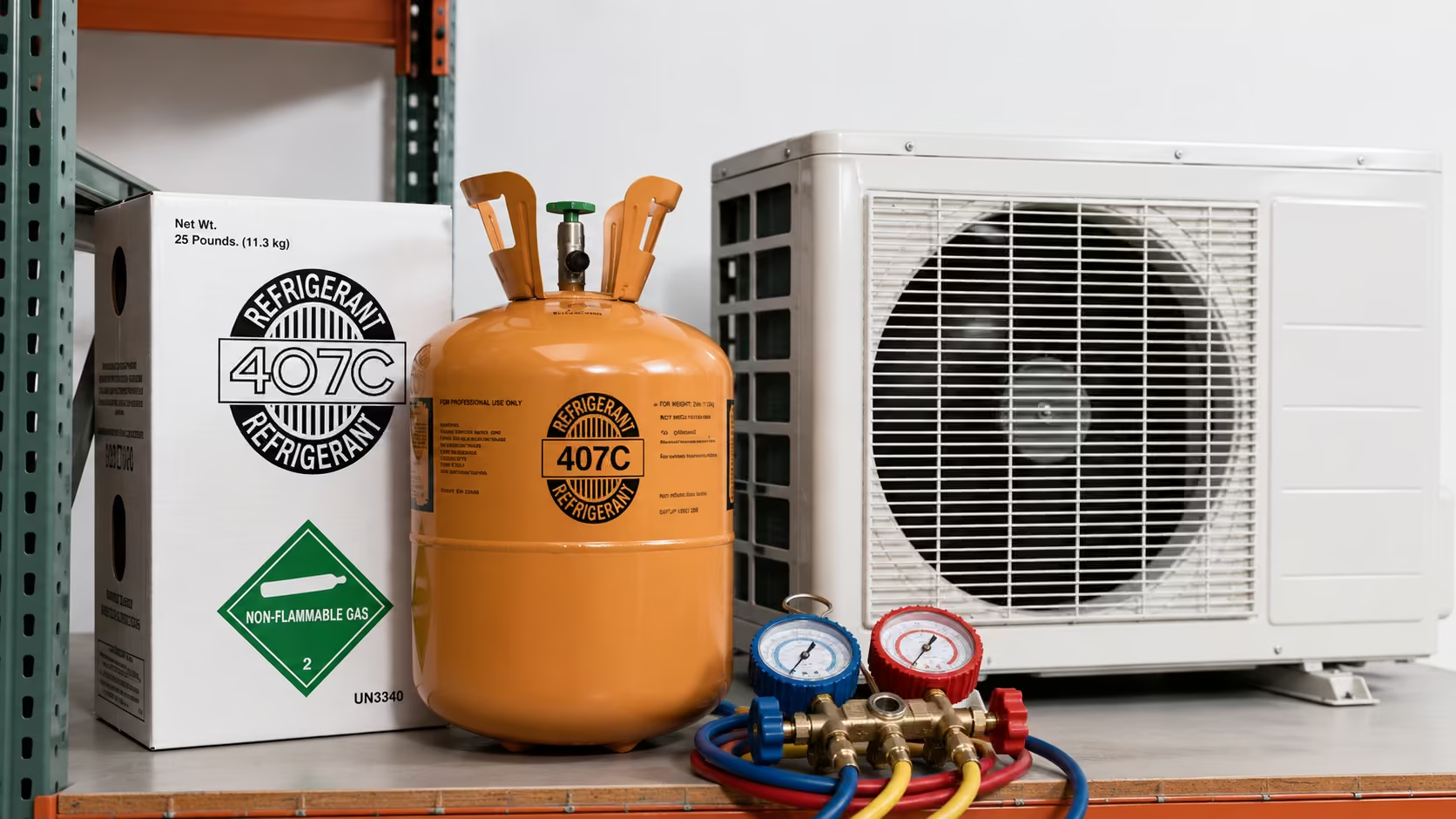
R-407C is available in 25lb cylinders for service and maintenance applications. When purchasing R-407C, always verify that the product meets AHRI 700 purity specifications and comes in DOT-approved cylinders with appropriate labeling. Counterfeit or contaminated refrigerant can cause significant system damage and is unfortunately present in some supply channels.
Store R-407C cylinders in a cool, dry location away from heat sources. The maximum recommended storage temperature is 52°C (125°F). Cylinders should be stored upright and protected from physical damage. Because R-407C is a zeotropic blend, cylinder orientation during storage and during charging matters always charge from the liquid phase to maintain blend composition.
8 Frequently Asked Questions About R-407C Refrigerant
Q1: Is R-407C a drop-in replacement for R-22?
R-407C is not a true drop-in replacement for R-22. It requires an oil change from mineral oil to POE oil before use in an existing R-22 system. Following the proper retrofit procedure is essential for reliable operation.
Q2: Can R-407C be mixed with R-22?
No. Mixing refrigerants is not acceptable practice. Any remaining R-22 must be completely recovered before R-407C is introduced into a system. Mixing refrigerants creates non-standard blends with unpredictable properties.
Q3: Why must R-407C be charged as a liquid?
Because R-407C is a zeotropic blend with temperature glide, vapor charging causes selective fractionation of the blend components. This changes the refrigerant composition in the system and causes performance problems. Always charge R-407C as a liquid.
Q4: What is the temperature glide of R-407C?
R-407C has a temperature glide of approximately 5–7°C (9–12.6°F). This glide must be accounted for when reading pressure-temperature charts and diagnosing system performance.
Q5: Is R-407C being phased out?
R-407C is not currently subject to the same phase-down pressures as R-410A under the AIM Act. It remains available for purchase and use in service applications. However, its long-term future is uncertain as regulations continue to evolve.
Q6: What type of oil does R-407C require?
R-407C requires POE (polyolester) oil. If retrofitting an R-22 system, the mineral oil must be completely flushed before POE oil and R-407C are introduced.
Q7: How much R-407C does a typical split system need?
The refrigerant charge for a specific system is determined by the equipment manufacturer or, for retrofits, by careful system evaluation. Always charge by weight using an accurate refrigerant scale rather than by pressure alone.
Q8: Where can I buy R-407C refrigerant in 25lb cylinders?
Smart Refrigerants offers R-407C in 25lb factory-sealed cylinders that meet AHRI 700 purity standards and DOT compliance requirements, with fast shipping to HVAC contractors across the US.
Conclusion
R-407C refrigerant has proven itself as a reliable and effective option for R-22 replacement in split systems and heat pumps, with a long track record of real-world service across global markets. While it requires proper retrofit procedures and POE oil conversion, technicians who follow the process correctly enjoy a refrigerant with performance characteristics that closely match R-22 in most applications.
Smart Refrigerants stocks R-407C refrigerant in 25lb factory-sealed cylinders ready to ship to HVAC contractors and refrigeration professionals nationwide. Whether servicing existing R-407C equipment or planning an R-22 retrofit, having quality refrigerant from a compliant supplier makes every service call more reliable.