

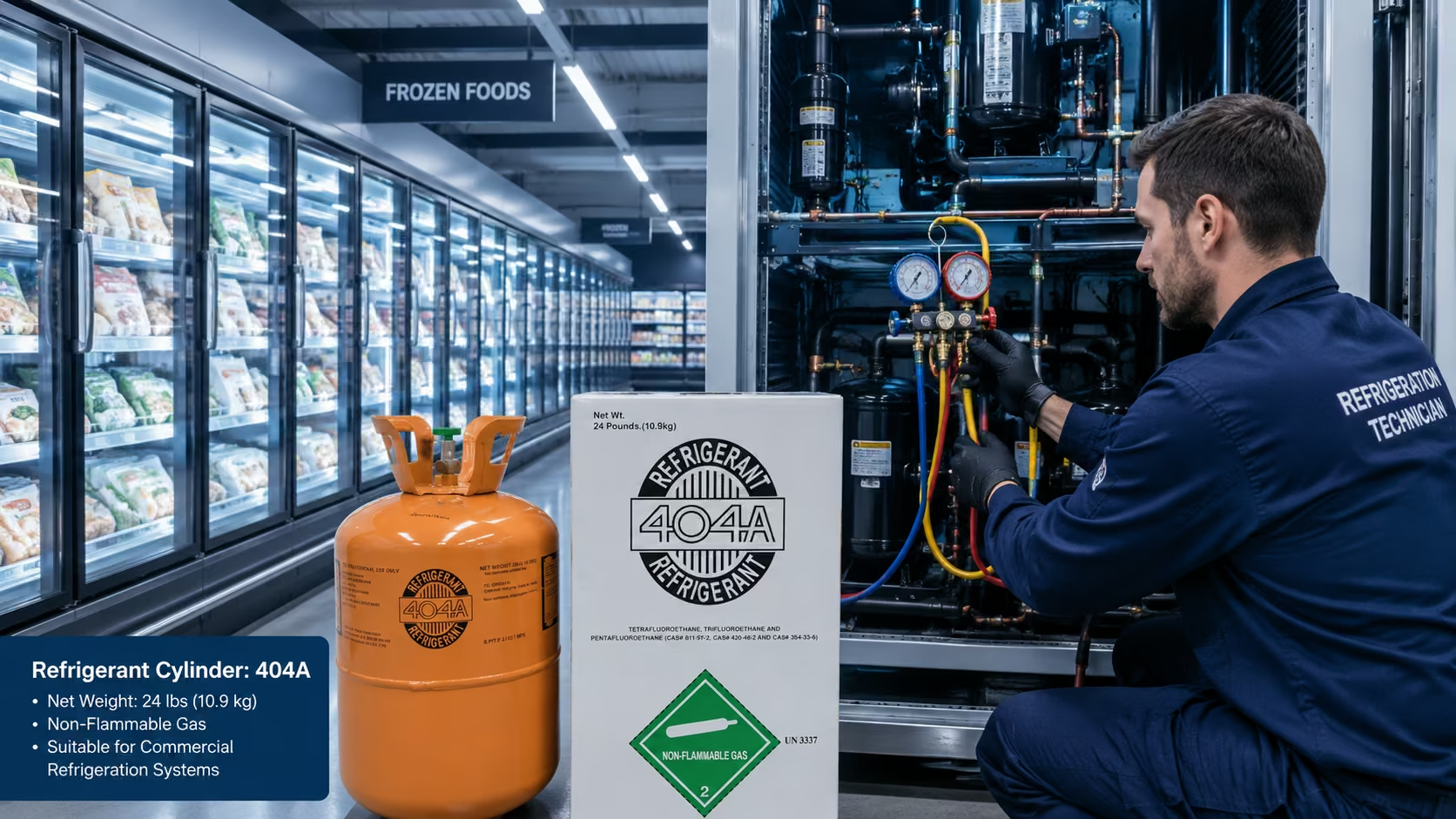
Walk into any supermarket in the United States and you are standing inside a building that almost certainly runs on R-404A refrigerant. Freezer aisles, dairy coolers, meat display cases, ice machines the vast majority of commercial refrigeration equipment installed over the past two decades uses R-404A as its primary refrigerant.
For commercial refrigeration professionals, understanding R-404A is fundamental. This article covers six critical facts about R-404A that every technician, facility manager, and refrigeration engineer should know, including its performance characteristics, environmental concerns, and what the future holds for systems that depend on it.
What Is R-404A and How Does It Work?
R-404A is an HFC refrigerant blend composed of three components: R-125 (44%), R-143a (52%), and R-134a (4%). It was developed as a replacement for R-502 an HCFC blend that contained chlorine and was phased out under the Montreal Protocol and as an alternative to R-22 in low-temperature commercial refrigeration applications.
R-404A is a near-azeotropic blend, meaning its components have very similar boiling points and do not significantly fractionate during normal operation. This near-azeotropic behavior makes it predictable and easier to work with compared to refrigerant blends with larger temperature glide values.
Why R-404A Excels in Low-Temperature Applications
R-404A is specifically optimized for low-temperature refrigeration. Its thermodynamic properties make it exceptionally effective at maintaining temperatures below freezing typically between -40°F and -10°F for the evaporator which is exactly what commercial freezers, blast chillers, and cold storage facilities require.
The refrigerant’s high pressure characteristics and efficient heat transfer properties enable compressors to pull down temperatures quickly after door openings and product loading events. This fast pull-down capability is essential in supermarkets and food distribution facilities where temperature excursions directly threaten food safety and product quality.
The Industries That Depend on R-404A
R-404A is the backbone refrigerant for several critical industries. Supermarkets and grocery stores use it in freezer display cases, reach-in coolers, and central refrigeration systems. Food distribution centers use it in blast freezers and cold storage rooms. Ice production facilities use it to manufacture commercial-scale quantities of ice. Pharmaceutical cold storage relies on it to protect temperature-sensitive medications and biological materials.
Transport refrigeration refrigerated trucks and trailers used for food distribution also extensively uses R-404A. The refrigerant’s performance in mobile applications, where ambient temperatures vary widely and compressors experience frequent cycling, has made it the dominant choice for the transport cold chain industry.
Fact 1 – R-404A Has the Highest GWP of Any Common Refrigerant
The most significant environmental concern with R-404A is its extremely high Global Warming Potential (GWP). At 3,922 more than 3,900 times the warming impact of an equivalent amount of carbon dioxide over 100 years R-404A has one of the highest GWP values of any refrigerant in widespread commercial use.
This high GWP has placed R-404A under significant regulatory scrutiny globally. In Europe, the F-Gas Regulations have been progressively restricting the use of high-GWP refrigerants including R-404A. In the United States, the EPA’s AIM Act is creating similar pressures, though the specific application restrictions are evolving.
California’s Restriction on Virgin R-404A
California has taken the most aggressive regulatory stance on R-404A in the United States. As of January 1, 2026, California prohibits the sale of virgin R-404A due to its high GWP. This restriction applies to virgin refrigerant only; California still permits reclaimed R-404A that meets AHRI 700 standards.
This regulatory precedent is important for contractors and facility managers across the country. California regulations frequently serve as a leading indicator of future federal policy. Refrigeration professionals who begin transitioning to lower-GWP alternatives now are better positioned for the regulatory environment of the next decade.
Lower-GWP Alternatives to R-404A
Several refrigerants have been developed and approved as lower-GWP alternatives to R-404A. The most important include R-448A (GWP approximately 1,387), R-449A (GWP approximately 1,397), R-452A (GWP approximately 2,140), and R-513A for certain medium-temperature applications.
These alternatives offer reduced environmental impact while delivering performance comparable to R-404A in most commercial refrigeration applications. The industry is transitioning to these alternatives, and refrigeration professionals who understand both R-404A and its successors are well equipped for the market’s evolution.
Fact 2 – R-404A Performance in Harsh Operating Conditions
R-404A was designed for demanding conditions, and it performs exceptionally well in environments where other refrigerants struggle. Understanding why helps technicians diagnose performance issues and optimize system operation.
The refrigerant’s pressure curve at low temperatures maintains adequate suction pressure for efficient compressor operation even when evaporator temperatures drop to -40°F. This is a critical advantage in blast freezing applications where maintaining compressor efficiency throughout the pull-down cycle directly affects energy costs and process throughput.
Temperature Stability in Walk-In Freezers
Walk-in freezers require refrigerants that maintain consistent temperatures even when the door opens frequently as happens in busy food service operations. R-404A’s thermodynamic properties enable rapid temperature recovery after these door events, which is essential for food safety compliance and energy efficiency.
Systems using R-404A can typically pull temperatures back to setpoint within a few minutes of a brief door opening. This performance characteristic directly affects energy bills, as systems that struggle to recover temperature must work harder and longer to maintain setpoint conditions.
Compatibility with Existing Commercial Refrigeration Equipment
One of R-404A’s practical advantages is its broad compatibility with existing commercial refrigeration equipment. The vast majority of commercial refrigeration systems installed in the US over the past 25 years were designed specifically for R-404A. This equipment includes compressors, evaporators, condensers, expansion valves, and associated controls.
This compatibility means that R-404A is the correct service refrigerant for the enormous installed base of commercial equipment currently in operation. Even as lower-GWP alternatives gain market share in new equipment, R-404A will remain essential for service work for many years. SmartRefrigerants.com stocks R-404A 24lb cylinders for commercial refrigeration professionals who need reliable supply with fast shipping.
Fact 3 – Proper Charging and Service Procedures for R-404A
Servicing R-404A systems requires attention to its near-azeotropic blend properties and high operating pressures. While R-404A behaves similarly to a pure refrigerant in most situations, understanding its specific characteristics helps ensure optimal system performance.
R-404A must be charged from the liquid phase of the cylinder when adding refrigerant to a system. This ensures that all three blend components enter the system in the correct proportions. Charging from the vapor phase can cause composition drift over time, particularly after large refrigerant losses.
Recovery and Recycling of R-404A
Recovery of R-404A before any system service, repair, or equipment decommissioning is legally required under EPA Section 608. Technicians must perform recovery using certified recovery equipment designed for the operating pressures of R-404A systems.
After recovery, R-404A that technicians cannot immediately reuse must go to a certified reclaimer for processing. Reclaimed R-404A that meets AHRI 700 standards can return to service. This creates a circular supply chain that extends the useful life of existing R-404A inventory.
Leak Detection in R-404A Systems
Leak detection is particularly important in R-404A systems for both environmental and economic reasons. R-404A’s high GWP means that even small leaks have significant environmental impact. Its relatively high cost makes leak management important from a business standpoint as well.
Modern electronic leak detectors calibrated for HFC refrigerants provide the most effective tool for locating R-404A leaks. Technicians also use UV dye injection to identify leak locations in systems where electronic detection is inconclusive. Technicians should repair all leaks promptly, and they should verify repairs through pressure testing before recharging.
Fact 4 – R-404A in Transport Refrigeration
Transport refrigeration represents one of the most demanding applications for any refrigerant. Reefer trailers and refrigerated trucks operate in ambient temperatures ranging from sub-zero winters to extreme summer heat. They experience constant vibration, frequent compressor cycling, and variable load conditions.
R-404A has proven itself exceptionally reliable in these conditions. Transport refrigeration units from well-known brands such as Thermo King and Carrier Transicold widely use R-404A as the standard refrigerant for decades. The refrigerant’s performance under high ambient temperatures and demanding load cycles makes it the first choice for transport applications.
Why R-452A Is Emerging as a Transport Alternative
R-452A is an HFO/HFC blend that serves as a lower-GWP alternative to R-404A specifically optimized for transport refrigeration. With a GWP of approximately 2,140 significantly lower than R-404A’s 3,922 R-452A reduces environmental impact while maintaining performance in high-ambient-temperature transport conditions.
R-452A’s thermodynamic properties are optimized for the high-head-temperature conditions typical in transport refrigeration units operating in summer heat. It demonstrates improved efficiency compared to R-404A in these conditions, making it an attractive option for fleet operators concerned about both environmental compliance and fuel costs.
Servicing Legacy R-404A Transport Equipment
Despite the availability of alternatives, millions of transport refrigeration units in the US continue to use R-404A and will do so for many years. These units require regular service, including refrigerant recharge after leak repair, compressor oil changes, and filter-drier replacement.
Refrigeration technicians serving the transport industry need reliable access to R-404A in appropriate quantities. The 24lb cylinder available from SmartRefrigerants.com suits transport refrigeration service, large enough to handle a typical recharge and portable enough for mobile service operations.
Fact 5 – Commercial Refrigeration Regulatory Outlook for R-404A
The regulatory future of R-404A is one of increasing restriction. California’s virgin R-404A ban effective January 2026 is the most significant immediate restriction, but it is unlikely to be the last.
The EPA’s AIM Act provides authority to restrict specific refrigerant uses, including commercial refrigeration. Industry observers widely anticipate that the EPA will impose restrictions on high-GWP refrigerants in commercial refrigeration applications in coming years, similar to what California has already implemented.
Planning for the R-404A Transition
Facility managers and contractors who service commercial refrigeration equipment should develop transition plans that account for the evolving regulatory environment. Key elements of a transition plan include:
Inventory of all equipment currently using R-404A, noting system ages and likely replacement timelines. Evaluation of lower-GWP alternatives (R-448A, R-449A, R-452A) for new equipment purchases. Budget planning for refrigerant cost increases as R-404A supply tightens. Training for technicians on lower-GWP refrigerant handling and service procedures.
Reclaimed R-404A as a Bridge Strategy
For facilities that cannot immediately replace R-404A equipment due to budget constraints, lease agreements, or operational disruption concerns reclaimed R-404A offers a bridge strategy. In California, reclaimed R-404A is still permitted. Across other US states, virgin and reclaimed R-404A remain available.
This strategy allows facilities to continue operating existing equipment while planning for phased replacement with systems that use lower-GWP refrigerants. The transition period provides time to budget for capital expenditure and schedule replacements during planned downtime rather than emergency situations.
Fact 6 – Choosing the Right R-404A Supplier
The commercial refrigeration industry operates on tight margins, and refrigerant cost management is an important lever. Choosing the right R-404A supplier affects not just purchase price but also supply reliability, cylinder quality, and the ability to meet emergency demand during equipment failures.
Commercial refrigeration equipment failures can occur at any time, including nights, weekends, and holidays. A supplier with ready inventory and fast shipping capability ensures that technicians can respond promptly to emergencies without waiting days for refrigerant to arrive.
What Makes SmartRefrigerants.com the Right Choice
SmartRefrigerants.com maintains ready inventory of R-404A in 24lb cylinders, sourced from trusted manufacturers that supply virgin-grade, factory-sealed product. All cylinders meet DOT approval and EPA compliance standards. US warehouses ship quickly nationwide so refrigerant arrives when it is needed most.
For commercial refrigeration contractors with recurring needs, bulk and pallet ordering options reduce per-unit cost and ensure continuous supply. SmartRefrigerants.com can coordinate scheduled deliveries that align with service schedules, minimizing the risk of running short during peak demand periods.
8 Frequently Asked Questions About R-404A Refrigerant
Q1: What systems use R-404A?
Commercial freezer display cases, cold storage rooms, blast freezers, ice machines, transport refrigeration units, and certain industrial cooling systems use R-404A.
Q2: Is R-404A banned in the US?
Virgin R-404A is banned in California as of January 2026. It remains legal in other US states. California permits reclaimed R-404A. National restrictions may evolve in coming years.
Q3: What is the GWP of R-404A?
3,922 one of the highest of any refrigerant in common use, which is driving regulatory restrictions on its use.
Q4: What are the best alternatives to R-404A?
R-448A, R-449A, and R-452A are the leading lower-GWP alternatives. The best choice depends on the specific application and equipment specifications.
Q5: Can R-404A be retrofitted into existing R-22 systems?
R-404A does not serve as a standard retrofit for R-22 comfort cooling systems. Engineers design it for low-temperature commercial refrigeration applications. R-438A or R-407C are more appropriate for R-22 HVAC retrofits.
Q6: How is R-404A different from R-410A?
Q7: Where can I buy R-404A in 24lb cylinders?
SmartRefrigerants.com stocks R-404A in 24lb factory-sealed cylinders with fast nationwide shipping and EPA-compliant packaging.
Q8: Is R-404A flammable?
No. R-404A carries an A1 safety classification non-toxic and non-flammable under normal service conditions.
Conclusion
R-404A refrigerant is the foundation of commercial refrigeration in the United States. The millions of systems running on it today will need professional service for years to come, making it an essential product for any contractor or refrigeration professional serving the commercial market.
Understanding R-404A’s performance advantages, environmental profile, and the regulatory trends affecting its future use is essential for providing expert guidance to customers. As the industry transitions, refrigeration professionals who stay informed and maintain supply relationships with reliable suppliers like SmartRefrigerants will continue to serve their markets effectively.