

R-134a Refrigerant: The Complete Guide for Automotive AC Systems
Every year, millions of vehicles across the United States need their air conditioning systems serviced. Technicians, shop owners, and fleet managers face the same question: which refrigerant does this vehicle use, how much is needed, and where can reliable product be purchased? Getting this wrong means a failed service, a warranty dispute, or worse a damaged compressor. The stakes are real, and the details matter.
R-134a refrigerant has been the standard for automotive air conditioning in the US since the mid-1990s, replacing the ozone-depleting R-12. It is currently used in hundreds of millions of vehicles on the road today, from passenger cars to light trucks and commercial vans. Despite newer alternatives appearing in vehicles manufactured after 2013, R-134a remains the dominant automotive refrigerant by installed base. This guide covers everything technicians and automotive professionals need to know about R-134a.
What Is R-134a and Why Was It Adopted?
R-134a, chemically known as 1,1,1,2-tetrafluoroethane (CH₂FCF₃), is a hydrofluorocarbon (HFC) refrigerant developed as a replacement for R-12 (dichlorodifluoromethane, commonly known as Freon). The Montreal Protocol of 1987 mandated the phase-out of chlorofluorocarbons like R-12 due to their ozone-depleting properties. R-134a has zero ozone depletion potential (ODP = 0), making it compliant with the Montreal Protocol requirements.
The US automotive industry transitioned to R-134a on a voluntary basis beginning with model year 1992 vehicles. By model year 1996, the transition was essentially complete, with all new vehicles using R-134a. The refrigerant quickly became the universal standard, supported by an infrastructure of service equipment, recovery machines, and technician training programs that is now deeply embedded in the automotive service industry.
Physical and Chemical Properties of R-134a
R-134a is a colorless, non-flammable gas at room temperature with a faint, slightly sweet ether-like odor. Its boiling point is -26.3°C (-15.3°F), which gives it excellent performance in automotive evaporator applications. The critical temperature is 101.1°C and critical pressure is 4.06 MPa. These properties make it well-suited for the operating conditions found in mobile air conditioning systems.
R-134a has a GWP of 1,430, which is why newer low-GWP alternatives like R-1234yf are being mandated in new vehicles. However, for the hundreds of millions of existing vehicles already using R-134a, the refrigerant remains the only compliant service option. Using anything other than R-134a in an R-134a system is both technically improper and potentially illegal under EPA regulations.
The Safety Classification of R-134a
R-134a carries an ASHRAE A1 safety classification. This means it has both low toxicity and is non-flammable. This safety profile is one reason R-134a was selected for automotive use vehicles operate in enclosed spaces where passenger safety is paramount. Technicians working with R-134a can use standard HFC refrigerant safety practices without the additional precautions required for flammable A2L or A2 refrigerants.
Despite its non-flammability, R-134a should still be handled with care. It can displace oxygen in enclosed spaces, and skin or eye contact with liquid refrigerant causes frostbite. Proper ventilation, safety glasses, and protective gloves are required when working with any refrigerant. Never discharge refrigerant to atmosphere EPA Section 609 regulations require proper recovery for automotive AC systems.
How Automotive AC Systems Use R-134a
The automotive air conditioning cycle using R-134a follows the same vapor-compression principles as any refrigeration system. The compressor (driven by the engine belt or an electric motor in hybrid/EV vehicles) pressurizes R-134a vapor. The high-pressure vapor moves to the condenser at the front of the vehicle, where it releases heat to the outside air and condenses to a liquid.
The liquid R-134a passes through an expansion device either a thermal expansion valve (TXV) or an orifice tube, depending on the system design. This expansion dramatically drops the pressure and temperature of the refrigerant. The cold, low-pressure refrigerant then flows through the evaporator, which sits in the dashboard. As warm cabin air passes over the evaporator, R-134a absorbs heat, cooling the air and returning to vapor form before the cycle repeats.
System Charge Amounts for Common Vehicles
Automotive R-134a charge amounts vary significantly by vehicle. Small passenger cars typically require between 14 oz and 24 oz. Full-size trucks and SUVs often need 28 oz to 40 oz. Large vans and some commercial vehicles can require over 50 oz. Always consult the vehicle’s service manual or the sticker located in the engine bay for the correct charge specification.
Overcharging an R-134a system is as harmful as undercharging. An overcharged system develops excessively high head pressure, which stresses the compressor and can cause it to shut down on the high-pressure safety switch. An undercharged system fails to cool adequately and can cause the compressor to run warm without sufficient lubrication from oil carried in the refrigerant stream. Accurate charging is a fundamental service skill.
Identifying R-134a Service Ports
R-134a automotive systems use unique service port fittings that prevent the accidental introduction of incompatible refrigerants. The low-side service port uses a 1/4-inch quick-connect fitting, while the high-side uses a 3/8-inch fitting. These are different from R-12 service ports, preventing inadvertent cross-contamination during the industry’s transition in the 1990s.
When servicing an R-134a system, always verify the system refrigerant type using an identifier tool before connecting recovery equipment. Some owners may have converted older vehicles from R-12 to R-134a, which requires different service procedures. Improper service in some vehicles may introduce contaminated refrigerant mixtures that technicians must handle through reclaim channels.
R-134a vs R-1234yf: Understanding the Transition
R-1234yf (2,3,3,3-tetrafluoropropene) is the next-generation refrigerant that began replacing R-134a in new vehicle manufacturing starting with model year 2013 in Europe and the US. R-1234yf has a GWP of just 4, compared to R-134a’s GWP of 1,430. This dramatic reduction makes R-1234yf compliant with current and anticipated future regulations on vehicle AC refrigerants.
The European F-Gas Regulation mandated R-1234yf in all new vehicle types from 2011, with existing models required to transition by 2017. In the US, the transition has been driven by corporate fuel economy and emissions compliance rather than a direct mandate, but virtually all new vehicles now use R-1234yf. Smart Refrigerants carries both R-134a automotive refrigerant and R-1234yf products to serve both the existing and new vehicle markets.
Why R-134a Remains Essential for Service
Despite the industry transition, R-134a will remain in heavy demand for automotive service for at least the next 15–20 years. The average age of vehicles on US roads is over 12 years. Tens of millions of R-134a-equipped vehicles will need AC service every year for the foreseeable future. An automotive shop that does not stock R-134a is turning away a very large segment of its potential customers.
The installed base of R-134a vehicles is massive. Any vehicle produced before approximately 2013 almost certainly uses R-134a. Even vehicles produced through 2020 may use R-134a, depending on make, model, and market. Technicians should verify the refrigerant type for every vehicle they service, but stocking R-134a remains an absolute necessity for any automotive HVAC shop.
Purchasing R-134a: Cylinders, Purity, and Compliance
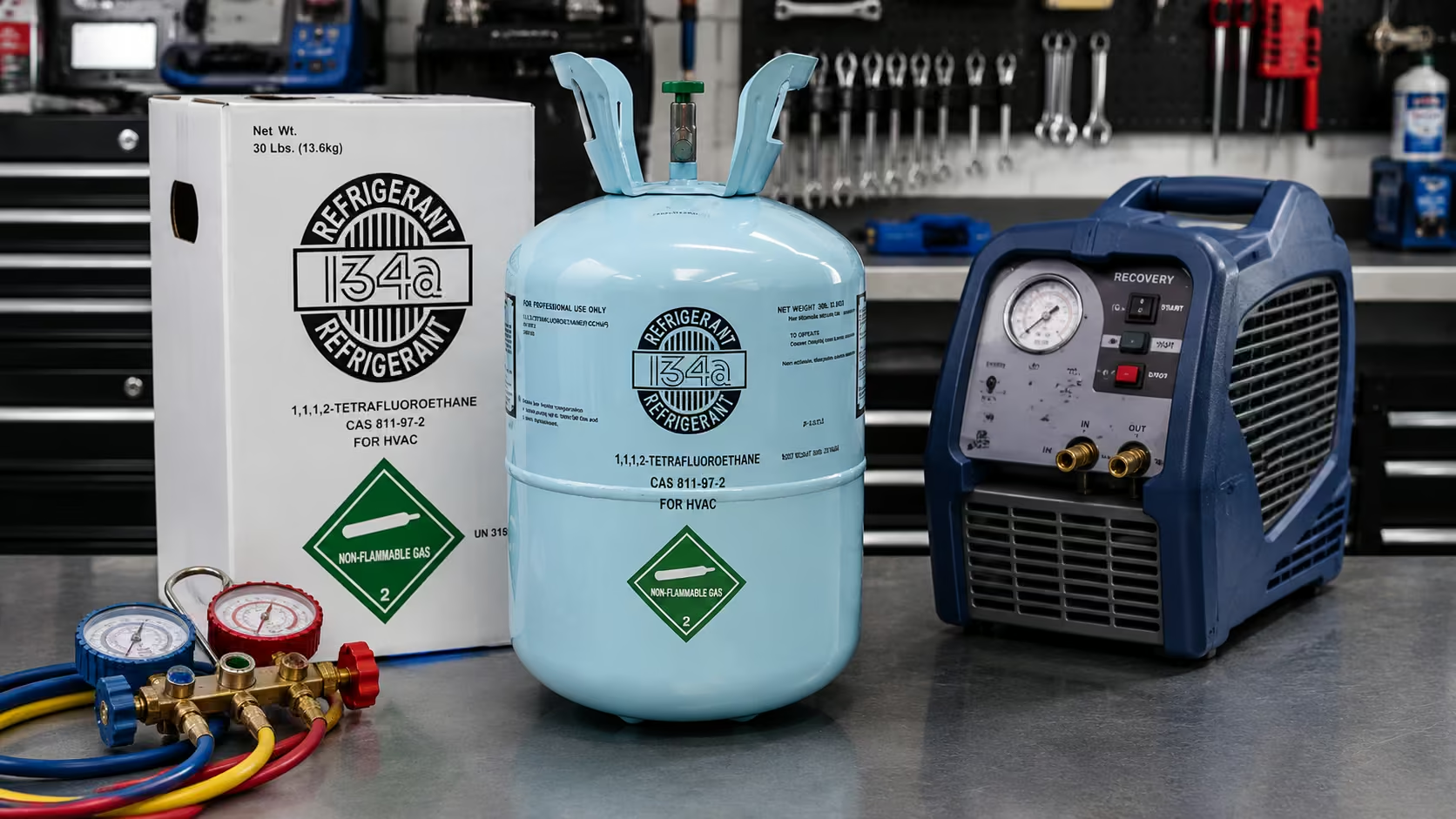
R-134a is available in multiple configurations for automotive service. Small 12 oz and 14 oz consumer cans are widely available at auto parts stores for DIY top-offs, but professional shops use 30 lb cylinders that provide much better economics for high-volume service. Smart Refrigerants offers R-134a in 30lb cylinders with 1/2 ACME automotive valve fittings as well as 30lb HVAC-grade cylinders with 1/4 ACME fittings.
Always purchase R-134a from reputable suppliers who can confirm AHRI 700 purity specification compliance. Off-spec R-134a containing moisture, air, or other contaminants can cause corrosion of AC system components, compressor failure, and system inefficiency. Virgin-grade R-134a from a certified supplier eliminates this risk. For high-volume operations, Smart Refrigerants also offers bulk pallet quantities of 20 and 40 cylinders with free freight for the most competitive per-pound pricing.
EPA Section 609 Requirements for Automotive Refrigerant
The EPA’s Section 609 regulations govern the service, repair, and disposal of automotive air conditioning refrigerant. Under these regulations, technicians must use EPA-approved refrigerant recovery equipment. Venting of R-134a to the atmosphere is prohibited. Technicians who intentionally vent refrigerant can face significant fines.
EPA Section 609 also requires that refrigerant service equipment be certified to SAE standards. Recovery machines must be capable of reducing system pressure to the levels specified in SAE J2209. Used R-134a that is recovered must be recycled in an approved machine or sent to a certified reclaim facility. Understanding these requirements is essential for any shop or technician servicing automotive AC systems.
Diagnosing Common R-134a AC System Problems
Understanding the relationship between R-134a system pressure and performance allows technicians to diagnose problems accurately. Using manifold gauges connected to both the high-side and low-side service ports, a technician can evaluate system operation against expected pressure-temperature relationships at a given ambient temperature.
Low suction pressure combined with warm discharge air often indicates low refrigerant charge, a restriction in the system, or a faulty expansion device. High suction pressure alongside warm discharge air can indicate a failing compressor or an overcharge condition. High head pressure with adequate cooling can indicate a condenser problem, poor airflow, or contamination in the refrigerant.
Using Manifold Gauges with R-134a Systems
Manifold gauge sets for R-134a use color-coded hoses and fittings: blue for the low side (suction), red for the high side (discharge), and yellow or black for the center service hose connected to the recovery machine or refrigerant supply. Technicians should always verify that gauges are calibrated and that hoses are not contaminated with residue from other refrigerants before connecting them to an R-134a system.
Before opening any automotive AC system for service, recover the refrigerant using an approved recovery machine. Even a small system charge contains enough refrigerant to violate EPA regulations if vented, and the moisture introduced into an open system can cause significant damage. All service procedures should follow vehicle manufacturer specifications and industry standards.
8 Frequently Asked Questions About R-134a Automotive Refrigerant
Q1: What vehicles use R-134a refrigerant?
Most vehicles produced between approximately 1994 and 2013 use R-134a. Some models continued using R-134a through 2020. Always check the vehicle’s underhood refrigerant sticker or the owner’s manual to confirm the correct refrigerant type.
Q2: Can I use R-1234yf instead of R-134a?
No. R-1234yf is not compatible with R-134a systems and must not be used as a substitute. Each refrigerant requires specific equipment, oil, and service procedures. Using the wrong refrigerant can cause system damage and is a regulatory violation.
Q3: How often does an automotive AC system need refrigerant?
A properly functioning AC system should not need refrigerant added on a regular basis. If a system is low on refrigerant, it indicates a leak that must be found and repaired before recharging. Repeatedly topping off a leaking system is not an appropriate service practice.
Q4: What is the difference between the 1/2 ACME and 1/4 ACME R-134a cylinders?
The 1/2 ACME valve is the standard connection for automotive service equipment, while 1/4 ACME is the standard HVAC connection. Automotive shops should purchase cylinders with 1/2 ACME fittings for compatibility with their service equipment.
Q5: Is R-134a flammable?
No. R-134a has an A1 safety classification, meaning it is non-toxic and non-flammable. It remains one of the safest refrigerants in common use.
Q6: How is R-134a priced compared to R-1234yf?
R-134a is significantly less expensive per pound than R-1234yf. A 30lb cylinder of R-134a is generally more cost-effective than R-1234yf, which commands a premium due to its newer technology and lower GWP credentials.
Q7: Can automotive R-134a be used in a refrigerator?
Using automotive-grade R-134a in domestic refrigerators is not recommended and may violate equipment manufacturer warranties. Refrigerator-grade R-134a meets different purity specifications, and manufacturers design the systems for different operating conditions. Technicians should not mix the two applications.
Q8: Where can I buy R-134a refrigerant in bulk for a shop?
Smart Refrigerants offers 30lb cylinders of R-134a in both automotive (1/2 ACME) and HVAC (1/4 ACME) configurations, with bulk pallet orders available at discounted pricing with free freight.
Conclusion
R-134a refrigerant remains one of the most important products in the automotive service industry. With hundreds of millions of vehicles still using it, demand for quality R-134a refrigerant will remain strong for many years. Technicians who understand its properties, service requirements, and regulatory obligations can provide excellent service across a very large vehicle population.
Smart Refrigerants stocks R-134a automotive refrigerant in 30lb cylinders that meet AHRI 700 purity standards, DOT cylinder compliance, and EPA requirements. For high-volume shops and fleet operations, bulk pallet orders with free freight make Smart Refrigerants the go-to source for professional automotive refrigerant supply.
Unused keywords for reference: arctic freeze ultra synthetic automotive refrigerant 134a, freon 134a automotive refrigerant