

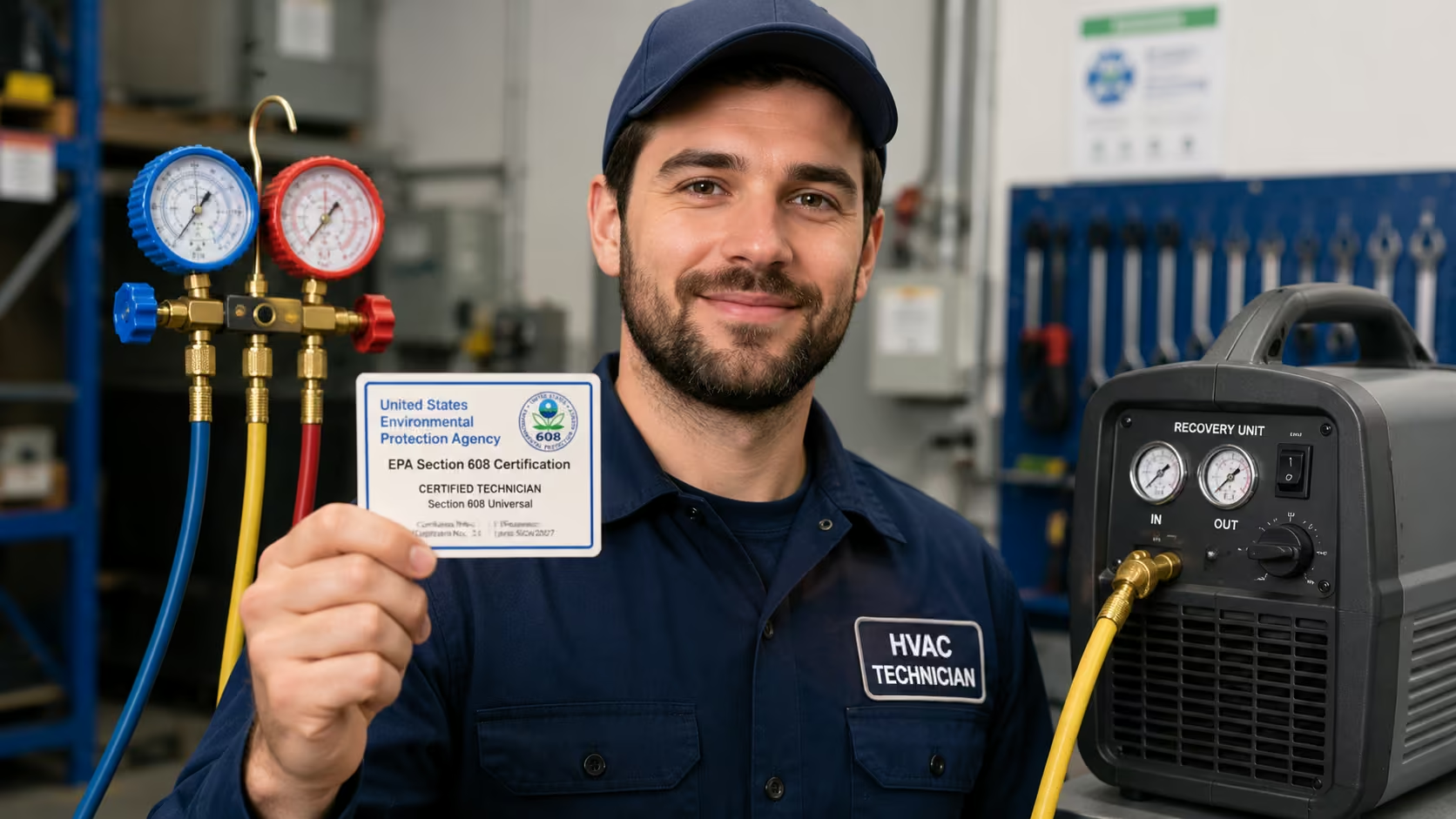
Every HVAC technician who works with refrigerants must have a specific federal certification. This is not optional, and it is not a formality. Working with refrigerants without proper certification carries real legal risk, including fines of up to $44,539 per day per violation under current EPA enforcement guidelines. More importantly, certification demonstrates that a technician understands the safe, legal, and environmentally responsible way to handle substances that can harm both people and the planet.
EPA Section 608 certification is the requirement that governs technicians who service, maintain, repair, or dispose of appliances that contain regulated refrigerants. Understanding what this certification covers, what the different types mean, and how to obtain and maintain it is essential for anyone building or operating an HVAC/R career in the United States. This guide covers the full picture.
What Is EPA Section 608 and Why Does It Exist?
EPA Section 608 of the Clean Air Act prohibits the knowing venting of ozone-depleting substances and their substitutes while maintaining, servicing, repairing, or disposing of refrigeration and air conditioning equipment. The section authorizes the EPA to establish regulations requiring technicians who work on this equipment to be certified.
The Clean Air Act established refrigerant provisions because the uncontrolled release of refrigerants, particularly older chlorofluorocarbons (CFCs) and hydrochlorofluorocarbons (HCFCs), contributed to stratospheric ozone depletion and climate change. The regulatory framework ensures that technicians receive training to properly recover refrigerants rather than releasing them to the atmosphere. Even modern HFC refrigerants that don’t deplete ozone fall under regulation because they are potent greenhouse gases.
The Scope of Section 608 Requirements
Under Section 608 regulations, any technician who performs maintenance, service, repair, or disposal of refrigeration and air conditioning equipment that could reasonably be expected to release regulated refrigerants must be certified. This covers a broad range of activities: adding refrigerant to a system, recovering refrigerant before opening a system, performing leak checks, servicing compressors, and disposing of equipment that contains refrigerant.
The regulations apply to commercial refrigeration, industrial process refrigeration, and comfort cooling (HVAC). They cover equipment containing CFCs, HCFCs, and HFCs, as well as HFO refrigerants that are classified as substitutes. The regulations also cover refrigerant recovery equipment: technicians must use recovery machines and cylinders that meet EPA specifications and follow established procedures.
The Four Types of Section 608 Certification
EPA Section 608 certification is divided into four types, each covering a different category of refrigeration and air conditioning equipment. Technicians may hold one, some, or all four types depending on the work they perform.
Type I certification covers small appliances.
This includes refrigerators, freezers, room air conditioners, PTAC units, and other appliances that contain five pounds or less of refrigerant and use a hermetically sealed compressor. Type I technicians may use simplified recovery techniques for these small systems.
Type II certification covers high-pressure appliances
except small appliances and motor vehicle air conditioning. This includes most residential and commercial split systems, heat pumps, and commercial refrigeration equipment using refrigerants like R-410A, R-22, R-407C, R-407A, R-448A, R-452A, and similar. Type II is the most common certification type for HVAC service technicians.
Type III certification covers low-pressure appliances.
This includes centrifugal chillers and similar equipment that uses refrigerants below atmospheric pressure at room temperature, such as R-11, R-113, and R-123. Type III is specialized and primarily relevant to commercial chiller service technicians.
Universal certification
covers all three categories Type I, II, and III combined. Universal certification is the most comprehensive and is recommended for technicians who work across multiple equipment types. It demonstrates maximum training and capability to employers and customers.
How to Obtain EPA Section 608 Certification
Obtaining EPA Section 608 certification requires passing a written examination administered by an EPA-approved certifying organization. The exam tests knowledge of refrigerant properties and safety, refrigerant handling and recovery requirements, EPA regulations, and proper service procedures. Different exam sections correspond to the different certification types.
Approved certifying organizations include ESCO Group, NATE (North American Technician Excellence), HVAC Excellence, Mainstream Engineering, and many others. These organizations offer both in-person and online testing options, with online proctored exams becoming increasingly popular. The exam costs vary by provider, typically ranging from $20 to $100 depending on the organization and number of certification types being tested.
Preparing for the Section 608 Exam
Preparation for the Section 608 exam is important, especially for technicians who are new to the field or who have limited experience with refrigerant regulations. Study materials are available from certifying organizations, HVAC training publishers, and online resources. Key study areas include the ozone depletion and global warming implications of refrigerants, refrigerant cylinder safety and handling, proper recovery procedures and recovery equipment requirements, and the specific regulations governing venting prohibitions, sales restrictions, and record-keeping.
Many HVAC training programs, vocational schools, and community colleges incorporate Section 608 preparation into their curriculum. Apprenticeship programs typically include Section 608 certification as a milestone. Technicians preparing independently can access practice exams and study guides from certifying organizations that help identify weak areas before taking the actual exam.
The Certification Process Step by Step
The process for obtaining Section 608 certification is straightforward. First, select an EPA-approved certifying organization and register for the exam. Review study materials covering the relevant certification types. Take and pass the exam with a score of 70% or higher. Receive the certification credential, which is typically a wallet card and a certificate. The certification does not expire once obtained, it remains valid indefinitely, though technicians should stay current with regulatory changes through ongoing education.
Refrigerant purchases from distributors and suppliers like Smart Refrigerants require proof of Section 608 certification. This requirement applies to HFCs and other regulated refrigerants, and suppliers are legally required to verify certification before selling refrigerant in containers above a specified size. Having certification on file with suppliers ensures uninterrupted access to the refrigerants needed for service work.
What Section 608 Certification Covers in Practice
The knowledge tested in Section 608 certification directly applies to everyday refrigerant service work. Understanding refrigerant properties helps technicians handle cylinders safely, interpret pressure readings correctly, and diagnose system problems accurately. Understanding recovery procedures ensures that refrigerant is properly captured before any system is opened, protecting both the technician and the environment.
The certification covers refrigerant cylinder safety in detail proper handling, storage, transportation, and the hazards associated with overfilling, excessive heat exposure, or physical damage. It covers the use of recovery equipment, including how to verify that recovery machines achieve required evacuation levels before opening a system. It covers leak detection requirements that apply when working on systems over a specified refrigerant charge threshold.
Record-Keeping Requirements for Certified Technicians
Section 608 regulations require that certain records be kept related to refrigerant purchases and use. Commercial refrigeration systems with a refrigerant charge of 50 pounds or more require the owner/operator to maintain records of the amount of refrigerant added at each service visit and to investigate leaks when the annual leak rate exceeds specified thresholds. Certified technicians who service these systems should understand these requirements and provide customers with the documentation needed to maintain compliance.
For individual technicians, keeping personal records of refrigerant purchased and used in service work is a best practice even where not explicitly required. These records can demonstrate responsible refrigerant stewardship in the event of an inspection or enforcement action.
Section 608 Updates and New Refrigerants
Section 608 regulations have been updated periodically to reflect changes in the refrigerant landscape. When HFCs became the primary regulated refrigerants following the phase-out of CFCs and HCFCs, the regulations were updated to cover them. As next-generation HFO and HFO blend refrigerants have become common, the EPA has issued guidance on their status under the program.
Technicians should stay informed about regulatory updates through the EPA’s website, industry associations like ACCA (Air Conditioning Contractors of America), ASHRAE, and trade publications. Certifying organizations also often issue updates to their study materials when significant regulatory changes occur. Staying current ensures continued compliance as the refrigerant landscape evolves.
8 Frequently Asked Questions About EPA Section 608 Certification
Q1: Is EPA Section 608 certification required for all HVAC technicians?
Yes. Any technician who works on refrigeration or air conditioning equipment that contains regulated refrigerants and could reasonably be expected to release those refrigerants must hold Section 608 certification.
Q2: Does Section 608 certification expire?
No. Section 608 certification does not have an expiration date. Once a technician passes the exam and receives certification, it remains valid. However, technicians should stay informed about regulatory changes even though the certification itself doesn’t expire.
Q3: How much does the Section 608 exam cost?
Exam costs vary by certifying organization, typically ranging from $20 to $100 for individual certification types. Universal certification (all three types) may be available as a bundled exam at a higher price.
Q4: Can you buy refrigerant without Section 608 certification?
No. Suppliers of regulated refrigerants in containers of more than two pounds must verify that purchasers hold appropriate Section 608 certification before completing a sale. Smart Refrigerants, like all responsible refrigerant suppliers, verifies certification before processing orders.
Q5: What is the fine for venting refrigerant without certification?
Knowingly venting regulated refrigerants can result in fines of up to $44,539 per day per violation under current EPA penalty guidelines. The EPA can assess these federal civil penalties regardless of whether the technician holds certification or not.
Q6: What is the difference between Type II and Universal certification?
Type II certification covers high-pressure appliances except small appliances and motor vehicle AC and this is the most relevant type for residential and commercial HVAC technicians. Universal certification covers Type I, II, and III combined. Technicians who work across equipment types should obtain Universal certification because it includes the full scope of Type I, II, and III.
Q7: Is Section 608 certification the same as Section 609 certification?
No. Section 609 specifically covers motor vehicle air conditioning (MVAC) systems. Section 608 covers stationary refrigeration and air conditioning equipment. Automotive AC technicians need Section 609 certification, while HVAC/R technicians need Section 608. Some technicians hold both.
Q8: Where can I find an EPA-approved Section 608 testing organization?
The EPA maintains a list of approved certifying organizations on its website. Major providers include ESCO Group, NATE, HVAC Excellence, and Mainstream Engineering. Many offer both in-person and online proctored testing.
Conclusion
EPA Section 608 certification is the foundation of professional, legal, and responsible refrigerant service in the United States. It is not just a box to check it is proof that a technician understands how to handle refrigerants safely, how to recover them properly, and how to comply with the environmental regulations that protect both the atmosphere and the public. Every HVAC/R professional should take it seriously.
For certified technicians, Smart Refrigerants provides the refrigerants needed to support professional service work from R-410A to R-32, R-407C, R-438A, and more all DOT-approved, EPA-compliant, and ready to ship. Certification first, then the right refrigerant from a supplier who understands the industry.