

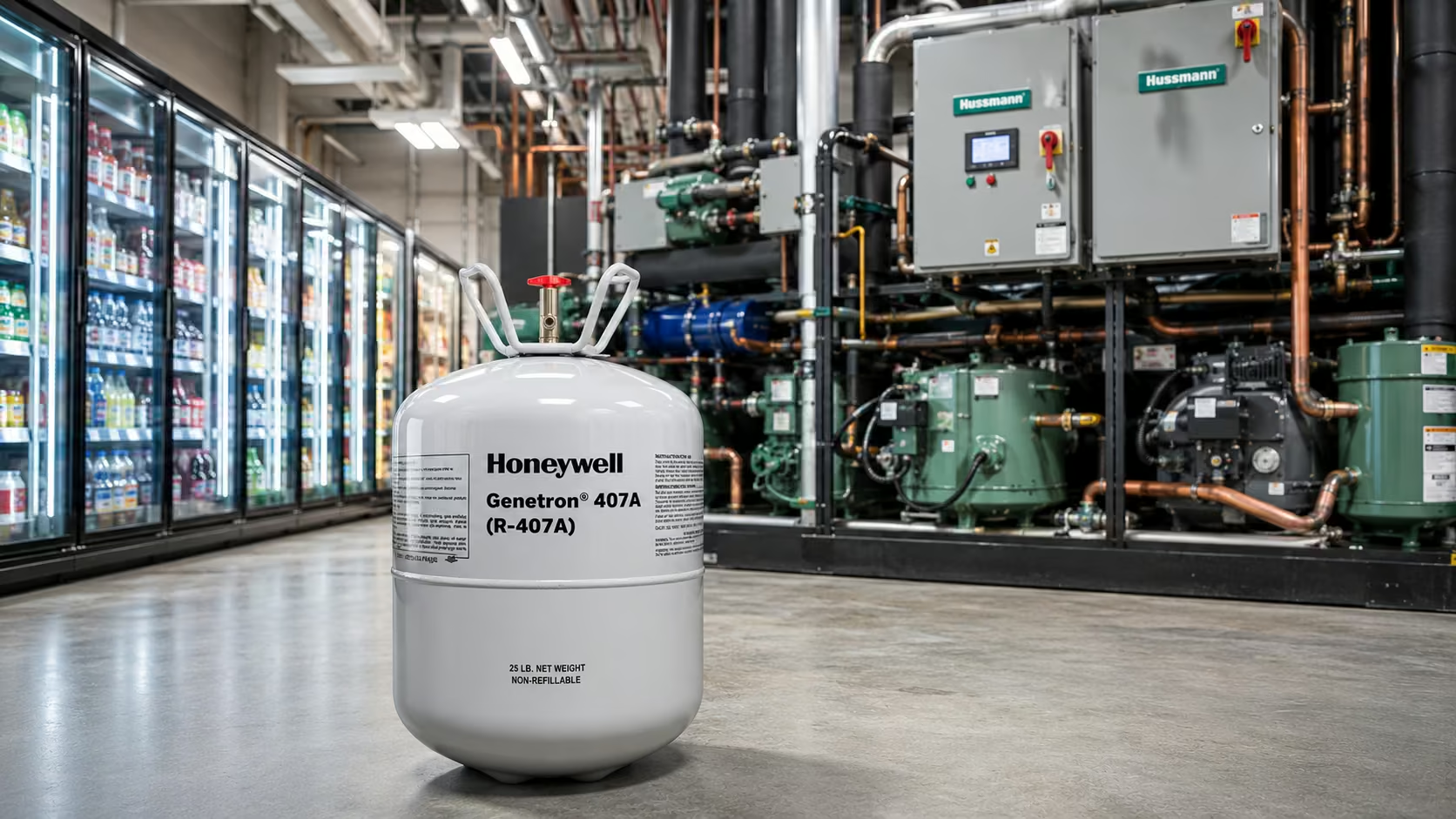
Commercial refrigeration is one of the most demanding environments for any refrigerant. Supermarket display cases, blast freezers, and cold storage warehouses operate continuously, often 24 hours a day, 365 days a year. Systems must maintain precise temperatures across wide ambient temperature swings. And they must do all of this while meeting tightening environmental regulations on the refrigerants they use. Choosing the right refrigerant is not a simple decision it affects operating costs, maintenance complexity, and regulatory compliance simultaneously.
R-407A was specifically formulated for low-temperature commercial refrigeration applications. It provides the performance characteristics needed for frozen food storage and blast chilling while offering a meaningful improvement in environmental profile compared to the refrigerants it replaces. This guide covers R-407A comprehensively its composition, performance, applications, comparison with alternatives, and practical service considerations.
What Is R-407A Refrigerant?
R-407A consists of a ternary zeotropic HFC blend composed of R-32 (20% by weight), R-125 (40%), and R-134a (40%). It replaces R-22 in low-temperature commercial refrigeration and also serves as an alternative to R-404A in certain low-temperature applications. Like other members of the R-407 refrigerant family (which includes R-407C and R-407F), R-407A has zero ozone depletion potential, making it compliant with Montreal Protocol requirements.
The GWP of R-407A is 1,923, which is lower than R-404A’s GWP of 3,922 but higher than some newer alternatives. As of January 1, 2026, California has restricted the sale of virgin R-407A due to its GWP. Outside California, it remains available for purchase and is an active service refrigerant for existing equipment. Smart Refrigerants offers R-407A in 25lb cylinders for refrigeration contractors.
The Zeotropic Blend Characteristics of R-407A
Like all members of the R-407 family, R-407A is a zeotropic blend. This means it has a temperature glide the different components evaporate and condense at different temperatures. R-407A’s temperature glide is approximately 5–8°C depending on conditions. Technicians must account for this glide when performing system service, particularly when measuring pressures and temperatures for system diagnosis.
The most critical practical implication of the temperature glide requires charging R-407A as a liquid. If technicians pull vapor from the cylinder, the lighter components (R-32 and R-125) preferentially enter the system, leaving the cylinder enriched in R-134a. This changes the blend composition and causes system performance problems. Always use a dip tube cylinder or charge from the liquid phase when working.
Performance Characteristics of R-407A in Low-Temperature Systems
R-407A was formulated with a higher concentration of R-32 and R-125 compared to R-407C, giving it better performance at lower temperatures. This composition allows R-407A to maintain adequate refrigerating effect at the suction conditions typical of low-temperature commercial refrigeration (typically -20°C to -35°C or -4°F to -31°F). R-407C, by comparison, is better suited to medium-temperature and comfort cooling applications.
In a properly designed and charged low-temperature system, R-407A provides reliable capacity comparable to R-22 at low-temperature operating conditions. The compressor and system must be specifically designed or approved for R-407A use. Original equipment manufacturers of commercial refrigeration racks, compressor packages, and display cases specify which refrigerants they approve for their equipment.
Oil Compatibility and System Requirements
R-407A requires POE (polyolester) lubricating oil, the same oil class required by most HFC refrigerants. Systems converting from R-22 (which uses mineral oil) to R-407A must undergo a complete mineral oil flush and POE oil replacement before charging with R-407A. This is a significant retrofitting requirement that should be factored into the cost and time estimate for any R-22 to R-407A conversion project.
For systems already using R-407A or other HFC refrigerants with POE oil, technicians generally find the existing oil compatible with continued R-407A service. Technicians should check oil condition and level as part of routine maintenance, and engineers recommend oil analysis for systems with significant operating hours to detect early signs of oil degradation or contamination.
R-407A Applications in Commercial Refrigeration
The primary application for R-407A is low-temperature commercial refrigeration. This includes frozen food display cases in supermarkets and convenience stores, walk-in freezers used in food service and food distribution, blast chillers and blast freezers in food processing, and cold storage warehouses for frozen goods.
These applications share a common requirement: maintaining temperatures at or well below 0°C (32°F) continuously and reliably. R-407A’s thermodynamic properties make it suitable for these conditions, providing adequate capacity and efficiency at the suction temperatures typical of frozen food storage. It has been used in commercial refrigeration rack systems and distributed refrigeration systems in supermarket and food service settings.
Supermarket Rack Systems with R-407A
Supermarket refrigeration rack systems are multi-circuit systems that serve multiple display cases from a centralized compressor rack. R-407A is used in low-temperature circuits within these rack systems, often alongside a separate medium-temperature circuit using a different refrigerant or refrigerant blend. Rack systems using R-407A typically serve the frozen food cases, ice cream cases, and other deep-freeze display cases in the supermarket.
Technicians servicing these rack systems need to be familiar with the specific characteristics of R-407A operation, including its temperature glide, the appropriate pressure-temperature relationships for diagnosis, and the required oil management practices. Refrigerant manufacturers provide detailed pressure-temperature charts for R-407A, and technicians should keep these charts with the service documentation for any rack system using this refrigerant.
R-407A vs R-404A: Environmental and Performance Comparison
The most common comparison for R-407A is with R-404A, a refrigerant that engineers and manufacturers have widely used in low-temperature commercial refrigeration for many years. R-404A has a GWP of 3,922, which is more than double R-407A’s GWP of 1,923. This GWP difference is one reason engineers developed R-407A and why engineers and system designers sometimes specify it as a lower-GWP alternative when systems do not require the full performance characteristics of R-404A.
From a performance standpoint, R-404A generally provides slightly better capacity and efficiency in deep-freeze applications compared to R-407A. R-404A was specifically optimized for low-temperature performance. R-407A trades some low-temperature performance for better environmental credentials. The decision between the two refrigerants depends on the specific application, operating temperatures, equipment design, and regulatory requirements.
Future Regulatory Considerations for R-407A
Both R-407A and R-404A are subject to long-term HFC phase-down under the AIM Act and the Kigali Amendment. R-407A’s lower GWP gives it a somewhat better regulatory position than R-404A, but its GWP of 1,923 still leaves it vulnerable to future phase-down pressure as lower-GWP alternatives become more widely available and cost-competitive.
Contractors and building owners making long-term investments in commercial refrigeration equipment should consider lower-GWP alternatives like R-448A or R-449A for new equipment when those options are technically viable. For existing systems using R-407A, the refrigerant remains serviceable and provides good performance within its regulatory standing today.
8 Frequently Asked Questions About R-407A Refrigerant
Q1: What is R-407A used for?
Engineers and manufacturers primarily use R-407A in low-temperature commercial refrigeration applications, including frozen food display cases, walk-in freezers, and supermarket rack systems that serve deep-freeze loads.
Q2: Is R-407A a drop-in replacement for R-22?
R-407A requires an oil change from mineral oil to POE oil when retrofitting an R-22 system, so it is not a true drop-in. It serves as a retrofit alternative to R-22 in low-temperature commercial applications after technicians follow proper conversion procedures.
Q3: What is the GWP of R-407A?
R-407A has a GWP of 1,923, which is lower than R-404A (3,922) but higher than newer alternatives. California has restricted the sale of virgin R-407A as of January 1, 2026.
Q4: Does R-407A require special oil?
Yes. R-407A requires POE (polyolester) lubricating oil. Systems converting from R-22 (mineral oil) must undergo a complete oil flush before technicians introduce R-407A.
Q5: Must R-407A always be charged as a liquid?
Yes. Because R-407A is a zeotropic blend with temperature glide, technicians must always charge it from the liquid phase to maintain consistent blend composition. Vapor charging causes fractionation and system performance problems.
Q6: How does R-407A compare to R-407C?
R-407A contains a higher concentration of R-32 and R-125 compared to R-407C, giving it better performance at low temperatures. R-407C performs better in medium-temperature and comfort cooling applications. Both belong to the R-407 refrigerant family.
Q7: Is R-407A flammable?
No. R-407A carries an A1 safety classification non-flammable and low toxicity.
Q8: Where can I buy R-407A refrigerant?
Smart Refrigerants offers R-407A in 25lb virgin cylinders, DOT-approved and EPA-compliant. Orders ship fast to commercial refrigeration contractors and HVAC/R professionals across the United States.
Conclusion
R-407A refrigerant fills an important niche in the commercial refrigeration market, providing low-temperature performance for frozen food applications while offering better environmental credentials than R-404A. Its HFC blend composition, POE oil compatibility, and familiarity of service procedures make it a manageable refrigerant for experienced commercial refrigeration technicians.
Smart Refrigerants stocks R-407A in 25lb low-temp commercial HVAC cylinders that are DOT-approved and EPA-compliant. For contractors servicing supermarket rack systems, walk-in freezers, and other low-temperature commercial applications, having quality R-407A on hand ensures service readiness for the existing installed base.