

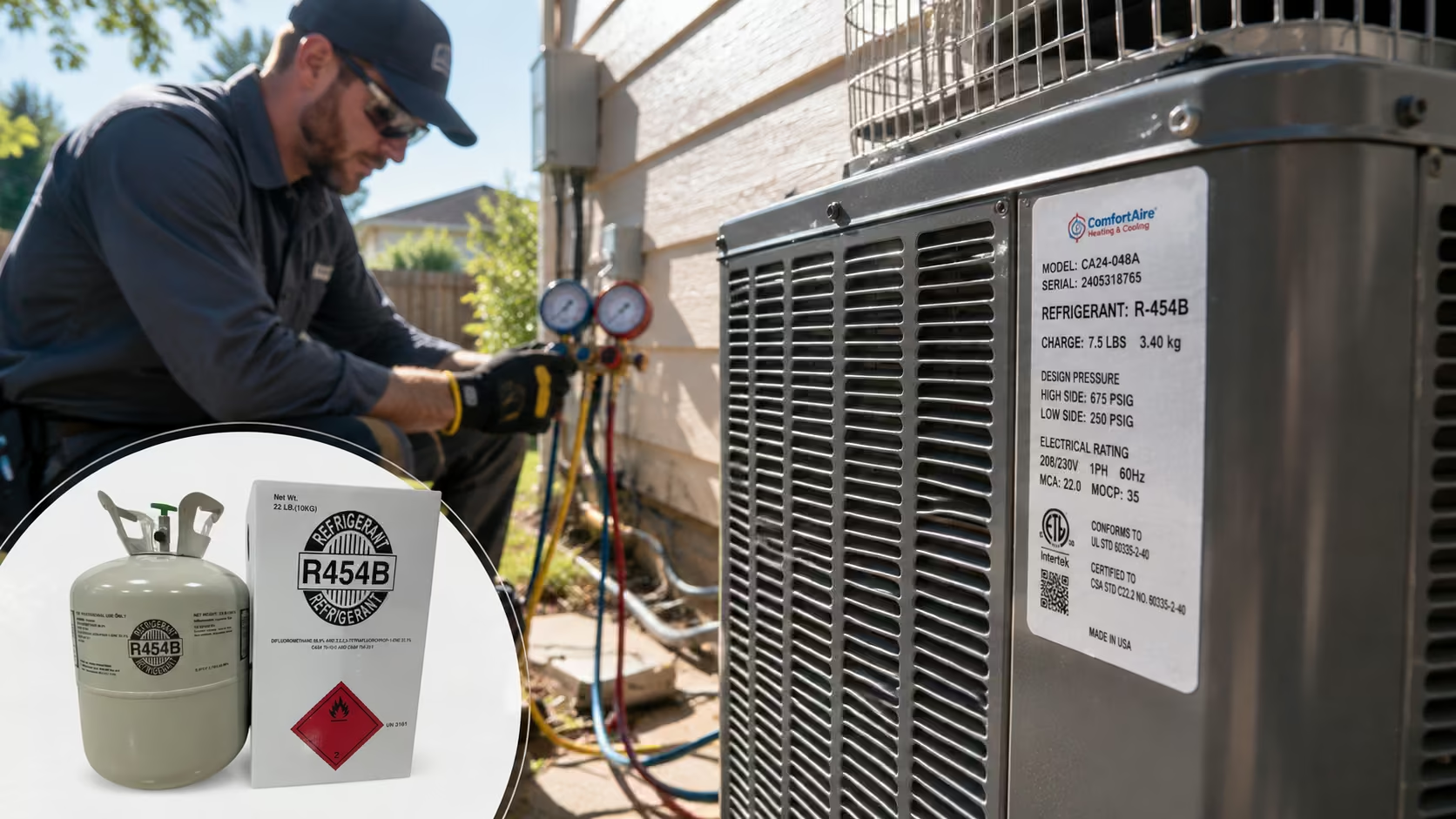
The HVAC industry is in the middle of its most significant refrigerant transition since the phase-out of R-22. R-454B serves as the primary replacement refrigerant for new residential and light commercial air conditioning equipment in the United States. It already runs in systems that manufacturers install today, and its presence in the market will only grow with time.
HVAC contractors who understand R-454B now gain a clear competitive advantage. Those who wait risk being unprepared when customers call for service on equipment that requires this refrigerant. This complete guide covers everything professionals need to know from chemical properties to safety handling and purchasing guidance.
What Is R-454B and Where Did It Come From?
R-454B is a refrigerant blend composed of R-32 (68.9%) and R-1234yf (31.1%). Engineers developed it as a direct substitute for R-410A in positive displacement HVAC systems, designing it to deliver similar thermodynamic performance while dramatically reducing environmental impact.
Chemours brought the refrigerant to market under the commercial name Opteon XL41. Multiple producers manufacture it, and refrigerant suppliers across the United States make it available. Equipment manufacturers including Carrier, Trane, Lennox, Rheem, and Daikin have redesigned their residential product lines to use R-454B.
Why R-454B Was Chosen Over Other Alternatives
Several refrigerant candidates were evaluated to replace R-410A. R-32 was a contender on its own, and R-466A was developed specifically to be non-flammable. Ultimately, R-454B emerged as the preferred choice for the US market because it offers the best balance of low GWP (466), good energy efficiency, manageable safety classification, and compatibility with compressor technology that manufacturers could adapt from their R-410A designs.
R-466A, while non-flammable, required more significant compressor redesign and did not achieve the same efficiency levels as R-454B in preliminary testing. R-32 alone has a GWP of 675 and an A2L safety classification, which made it a less preferred choice for the US residential market compared to R-454B’s slightly lower GWP.
How R-454B’s GWP Compares to Other Refrigerants
The Global Warming Potential (GWP) of R-454B is 466. Compare this to R-410A at 2,088 and R-22 at approximately 1,700. R-454B represents a roughly 78% reduction in GWP compared to R-410A. This reduction is central to why regulators and equipment manufacturers selected it as the primary replacement refrigerant.
For context, the AIM Act requires the HVAC industry to significantly reduce its HFC usage to address the climate impact of refrigerant emissions. R-454B meets the EPA’s low-GWP thresholds for use in new residential and commercial HVAC equipment.
R-454B Safety Classification and What It Means for Contractors
R-454B carries an A2L safety classification under ASHRAE Standard 34. This classification means the refrigerant has low toxicity (A) and is mildly flammable (2L). The “L” in 2L indicates a low burning velocity less than 10 cm/s which significantly reduces the practical fire risk compared to A2 or A3 refrigerants.
Understanding the A2L classification is critical for contractors who are transitioning from R-410A, which is classified as A1 (non-flammable). The handling and safety requirements for A2L refrigerants are different, and equipment manufacturers have incorporated new safety features into R-454B equipment designs to address this.
What A2L Means in Practice for HVAC Technicians
A2L refrigerants can ignite under specific conditions they require an ignition source, the right fuel-to-air mixture, and minimum energy for ignition. In practice, the low burning velocity of A2L refrigerants means that small leaks are unlikely to sustain a flame. However, large leaks in enclosed spaces can create flammable mixtures if an ignition source is present.
Equipment manufacturers design R-454B systems with safety features to mitigate this risk. These features include leak detection sensors, enhanced ventilation, ignition source controls, and software-based refrigerant management systems that limit the amount that can release in the event of a leak. Technicians must familiarize themselves with these safety systems before servicing R-454B equipment.
Handling and Storage Requirements for A2L Refrigerants
When handling R-454B, technicians should follow enhanced safety protocols. These include ensuring adequate ventilation in work areas, avoiding ignition sources near refrigerant handling, using properly calibrated leak detectors that are sensitive to R-454B, and storing cylinders away from heat sources and flames.
The same general precautions used for all refrigerants apply proper PPE including gloves and eye protection, upright cylinder storage, secure transport with additional awareness of the flammability risk. Training and certification programs covering A2L refrigerants are increasingly available through industry organizations.
R-454B vs R-410A – Key Performance Differences
R-454B was designed to be a functional replacement for R-410A, and its thermodynamic properties are similar in many respects. However, there are important differences that technicians must understand to service R-454B equipment correctly.
The operating pressures of R-454B are similar to R-410A, which means equipment manufacturers could adapt many existing design elements. However, R-454B is an HFO/HFC blend with a meaningful temperature glide of approximately 0.8°C. This is a notable difference from R-410A, which has near-zero glide.
Understanding Temperature Glide in R-454B Systems
Temperature glide refers to the change in temperature of a refrigerant blend during evaporation or condensation at constant pressure. R-454B’s glide of 0.8°C is small compared to some blends but still requires technicians to account for it during charging and diagnosis.
When charging an R-454B system, technicians must draw the refrigerant from the cylinder as a liquid, not a vapor, to maintain the correct blend ratio. Charging as vapor causes component separation and alters the refrigerant composition. This differs from R-410A, which technicians can safely charge as vapor in many situations. Technicians must adjust their charging procedures accordingly.
Lubricant Compatibility for R-454B
Like R-410A, R-454B requires polyol ester (POE) lubricant. In many cases, technicians can use the same grades of POE oil that they use in R-410A systems with R-454B. However, technicians should always verify lubricant specifications with the equipment manufacturer, as manufacturers may recommend different formulations for optimal performance.
The general service procedures for R-454B systems including recovery, evacuation, and charging are similar to R-410A procedures with the important addition of A2L safety awareness and liquid charging requirements. Contractors who are already proficient with R-410A service will find R-454B service approachable with appropriate training.
Which New HVAC Systems Use R-454B?
As of 2025, virtually all new residential split system air conditioners and heat pumps manufactured for the US market use either R-454B or R-32. The majority of major equipment brands have standardized on R-454B as the primary refrigerant for their new residential product lines.
Commercial HVAC equipment has a broader range of replacement refrigerants in use, including R-32, R-452B, and R-466A, depending on application and manufacturer. For residential and light commercial applications in the US, R-454B is the dominant choice and is likely to remain so for the foreseeable future.
How to Identify R-454B Equipment in the Field
When a technician encounters a system they have not serviced before, identifying the refrigerant type is the essential first step. For R-454B systems, the equipment label found on the outdoor condenser unit will specify R-454B as the required refrigerant. The label will also specify the charge weight and may include reference pressures.
Do not rely on physical appearance alone to identify the refrigerant type. Some manufacturers use similar looking equipment for different refrigerants. Always check the equipment label before connecting gauges or adding any refrigerant.
Equipment That Cannot Use R-454B
R-454B is not a retrofit refrigerant. Manufacturers design it for use only in equipment specifically manufactured for it. Systems designed for R-410A, R-22, or other refrigerants cannot convert to R-454B service. The required safety features, lubricant systems, and equipment specifications differ enough that retrofitting would not be safe or cost-effective.
When an R-410A system fails beyond economic repair, the replacement unit will use R-454B. This is the primary entry point for R-454B into a contractor’s service business. Stocking R-454B now ensures that contractors are ready to service these replacement units from day one. You can purchase R-454B refrigerant cylinders from SmartRefrigerants with fast nationwide shipping.
Purchasing R-454B Refrigerant – What to Know
R-454B is subject to the same EPA Section 608 regulatory framework as other refrigerants used in stationary cooling systems. Technicians must hold valid Section 608 certification to purchase it. As an A2L refrigerant, there may also be additional handling documentation requirements that suppliers or distributors communicate at the time of purchase.
Pricing for R-454B reflects its status as a newer, lower-GWP refrigerant. As production scales up with growing demand, pricing is expected to stabilize. Early movers who establish reliable supply relationships now will benefit from pricing continuity as the market develops.
Cylinder Sizes and Bulk Options
R-454B is available in 20lb cylinders from SmartRefrigerants.com a practical size for contractors handling residential and light commercial service. For high-volume operations, bulk and pallet orders are available.
The 20lb cylinder suits the refrigerant charge weights typical in residential systems. A standard residential split system using R-454B requires a charge similar to an R-410A system by weight, so the 20lb cylinder provides enough refrigerant for multiple residential charges or a complete commercial system recharge.
Storage and Handling of R-454B Cylinders
R-454B cylinders should be stored upright in a cool, well-ventilated area away from heat sources, open flames, and electrical equipment. The A2L flammability classification means that storage areas should not contain ignition sources as an added precaution.
All DOT regulations for refrigerant cylinder transport apply. Transporters must secure cylinders during transport to prevent rolling or falling. When cylinders are not in use, they must keep protective caps in place.
8 Frequently Asked Questions About R-454B
Q1: Is R-454B a drop-in replacement for R-410A?
No. R-454B requires equipment specifically designed for it. It cannot be used in systems designed for R-410A without significant equipment modifications that are generally not cost-effective.
Q2: Is R-454B flammable?
R-454B falls under the A2L classification, meaning it is mildly flammable with a very low burning velocity. Under normal service conditions with proper ventilation, the practical flammability risk remains minimal. Equipment manufacturers design systems with safety features to manage this risk.
Q3: What is the GWP of R-454B?
466 approximately 78% lower than R-410A’s GWP of 2,088.
Q4: When did new HVAC equipment start using R-454B?
Equipment manufacturers began introducing R-454B products in 2023 and 2024. New residential equipment manufactured after January 1, 2025 must use low-GWP refrigerants like R-454B.
Q5: Can I charge R-454B as a vapor?
No. R-454B requires liquid charging to maintain correct blend composition. Always draw from the liquid port of the cylinder and follow manufacturer charging procedures.
Q6: What lubricant does R-454B use?
Polyol ester (POE) oil similar to what is used in R-410A systems. Always verify the specific grade with the equipment manufacturer.
Q7: Is Section 608 certification required to purchase R-454B?
Yes. EPA Section 608 certification requires purchase of refrigerants for stationary HVAC use, including R-454B.
Q8: Where can I buy R-454B refrigerant?
SmartRefrigerants.com stocks 20lb R-454B cylinders with fast nationwide shipping, DOT certification, and EPA-compliant packaging.
Conclusion
R-454B is not a future refrigerant it is the present reality of new HVAC equipment in the United States. Contractors who invest time in understanding its chemistry, safety requirements, and service procedures now will position themselves well to serve the growing installed base of R-454B systems.
The transition from R-410A to R-454B is the most significant refrigerant shift since the R-22 phase-out, and it brings both challenges and opportunities. Building knowledge, skills, and supply relationships around R-454B today is the foundation of a competitive HVAC business for the next decade. Visit SmartRefrigerants for professional-grade R-454B cylinders with fast shipping across the USA.