

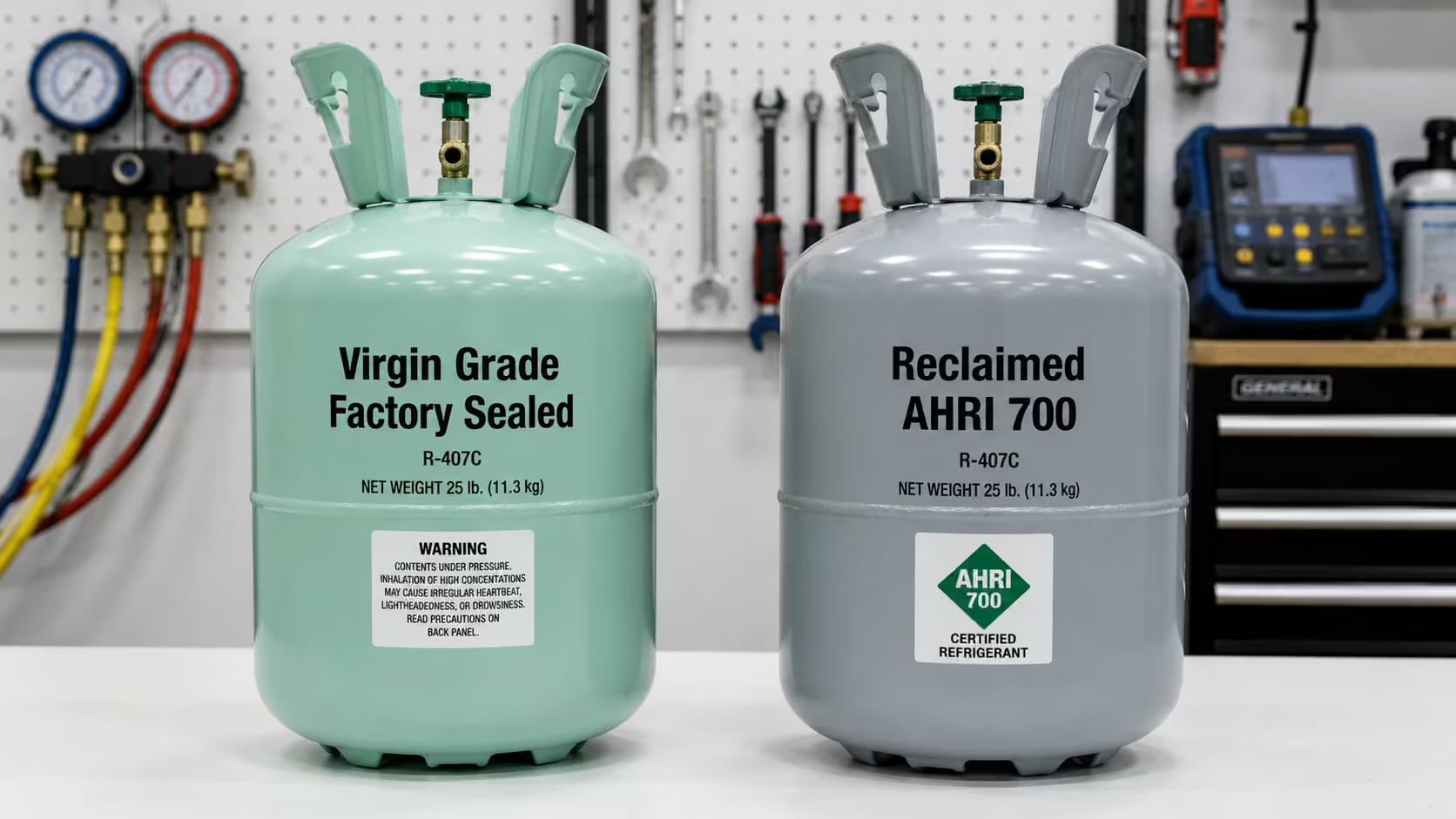
Every HVAC technician faces this question when ordering refrigerant: virgin or reclaimed? The price difference can be significant. The quality implications are real. And the wrong choice can cost far more in equipment damage than the initial savings on refrigerant.
This guide examines the difference between virgin refrigerant and reclaimed refrigerant in detail what each is, how each is produced, what quality standards apply, and when each is appropriate. Understanding these distinctions helps contractors make informed purchasing decisions that protect their customers’ equipment and their own professional reputation.
What Is Virgin Refrigerant?
Virgin refrigerant is refrigerant that has been manufactured from raw chemical materials, has never been used in any cooling system, and has been sealed at the factory under controlled conditions. Every molecule of the refrigerant is in its original, pure chemical state.
Virgin refrigerant meets AHRI 700 purity standards a set of specifications that define maximum allowable levels of contaminants including moisture, air, non-condensables, high-boiling residues, and particulates. When a cylinder carries a label stating virgin refrigerant meets AHRI 700, the manufacturer has tested and certified it to meet these specifications before it leaves the manufacturing facility.
How Virgin Refrigerant Is Manufactured
The manufacturing process for virgin refrigerants involves controlled chemical synthesis under industrial conditions. For HFC refrigerants like R-410A, manufacturers combine raw fluorinated compounds under specific temperature, pressure, and catalyst conditions to produce the desired refrigerant blend. They then purify, test, and fill the product into DOT-certified cylinders under controlled conditions that exclude moisture and air.
The factory-fill process uses specialized equipment that evacuates the cylinder before filling, ensuring that no air or moisture contamination enters during the fill process. The manufacturer then seals the cylinder with tamper-evident mechanisms that allow the buyer to verify the seal has not been broken since the factory.
Why Factory Sealing Matters
The integrity of the factory seal on a virgin refrigerant cylinder is the buyer’s primary assurance of product quality. A cylinder with an intact factory seal that a reputable manufacturer correctly labels should contain refrigerant that meets AHRI 700 specifications.
When a seal is broken or shows signs of tampering, the buyer cannot be certain that the contents are what the label claims. Refrigerant can become contaminated, diluted, or substituted after someone breaks the seal. This is why inspecting seals before accepting any refrigerant delivery is an important professional practice.
What Is Reclaimed Refrigerant?
Reclaimed refrigerant is refrigerant that technicians recover from a cooling system during service, repair, or equipment decommissioning, and that they subsequently process to remove contaminants and return it to a condition where it meets AHRI 700 purity specifications.
The reclamation process begins with recovery collecting refrigerant from a system using certified recovery equipment. After recovery, technicians deliver the refrigerant to a reclamation facility where it undergoes processing including distillation, filtration, and testing to remove contaminants such as oil, moisture, air, and foreign refrigerants.
The Reclamation Process and AHRI 700 Certification
Certified reclaimers who meet EPA requirements can process recovered refrigerant to AHRI 700 standards. When reclaimed refrigerant successfully meets AHRI 700 specifications, regulations legally permit its sale as equivalent to virgin refrigerant for use in HVAC and refrigeration systems.
The EPA maintains a list of certified reclaimers who have demonstrated the capability to process refrigerant to AHRI 700 standards. Reclaimed refrigerant from these certified facilities is theoretically equivalent in purity to virgin product. The word “theoretically” is important the equivalence depends entirely on the quality and thoroughness of the reclamation process.
The Risks Associated with Improperly Reclaimed Refrigerant
Not all reclaimed refrigerant meets AHRI 700 standards. The refrigerant market contains examples of improperly reclaimed or mislabeled refrigerant that does not meet the purity standards it claims. This creates risk for contractors who purchase reclaimed refrigerant without adequate supplier verification.
Potential problems with substandard reclaimed refrigerant include residual oil that processing did not fully remove (affects heat transfer and lubricant management in the target system), moisture contamination (causes acid formation and corrosion), foreign refrigerant contamination (alters pressure-temperature relationship and can damage equipment designed for a specific refrigerant), and air contamination (raises operating pressure and reduces cooling efficiency).
AHRI 700 – The Quality Standard That Matters Most
AHRI 700 is the specification that defines acceptable purity for both virgin and reclaimed refrigerants. Understanding what AHRI 700 requires helps contractors evaluate refrigerant quality claims and make informed purchasing decisions.
AHRI 700 sets maximum limits for the following contaminants: water (moisture), air and non-condensables, high-boiling residues (including oil), chloride ions, acidity, particulates, and other refrigerants. Each refrigerant type has specific AHRI 700 limits that reflect its particular chemistry and application requirements.
Why AHRI 700 Compliance Is Not Guaranteed
Both virgin and reclaimed refrigerant can carry the label “AHRI 700 compliant” without giving the buyer any independent way to verify the claim at the point of purchase. The refrigerant in a cylinder looks the same regardless of purity level. Without laboratory testing, visual inspection cannot determine whether a cylinder of refrigerant meets AHRI 700 specifications.
This information asymmetry favors buyers who purchase from suppliers with strong reputations, established quality systems, and verifiable supply chains. A supplier who sources directly from major manufacturers (for virgin product) or certified reclaimers (for reclaimed product) and maintains proper documentation provides greater assurance of AHRI 700 compliance than an unknown source with no documentation.
Testing Options for Verifying Refrigerant Quality
Contractors who have concerns about refrigerant quality can use refrigerant identifiers handheld electronic instruments that analyze refrigerant composition and detect contamination. These instruments can identify the refrigerant type (useful for detecting mislabeled product) and flag contamination with air, moisture, or other refrigerants.
Using a refrigerant identifier before adding refrigerant to a customer’s system is a professional practice that protects both the customer and the contractor. It only takes a minute to test but can prevent expensive system damage from contaminated refrigerant.
When to Choose Virgin Refrigerant
Virgin refrigerant is the superior choice in most HVAC service situations. The assurance of purity, the protection of equipment warranties, and the predictability of system performance make virgin refrigerant the professional standard.
For any service situation involving new equipment, warranty-covered equipment, high-value commercial systems, or situations where the cost of equipment failure would be significant, virgin refrigerant is the appropriate choice. The premium over reclaimed refrigerant is small relative to the risk of equipment damage from contaminated refrigerant.
Virgin Refrigerant for New Equipment Commissioning
When commissioning new HVAC or refrigeration equipment, virgin refrigerant should always be used. Equipment manufacturers specify virgin refrigerant meeting AHRI 700 standards for initial system charges, and using non-virgin product during commissioning may void the equipment warranty.
New equipment represents significant capital investment by the owner. Protecting that investment with the highest-quality refrigerant available is the professional approach. Cutting corners on refrigerant quality during commissioning is a risk-reward calculation that never makes sense the cost savings are minor, and the potential consequences are severe.
Virgin Refrigerant for Warranty-Covered Systems
For systems still under manufacturer warranty, using virgin refrigerant protects the customer’s warranty rights. Equipment manufacturers can void warranties if they determine that service technicians used non-specification materials during service. If a compressor fails and the manufacturer’s analysis determines that contaminated refrigerant contributed to the failure, the manufacturer may reject the warranty claim.
Contractors who use virgin refrigerant for all warranty-covered service work have documentation they can provide if a warranty dispute arises. This protection benefits the customer and protects the contractor from liability for warranty claims that result from refrigerant quality issues.
When Reclaimed Refrigerant May Be Appropriate
Reclaimed refrigerant is not inherently inferior when properly processed and certified to AHRI 700 standards, it is technically equivalent to virgin product. There are situations where reclaimed refrigerant is a legitimate and cost-effective choice.
The most important situation where reclaimed refrigerant is not just acceptable but necessary is R-22 service in California. Because California prohibits virgin R-22 and reclaimed R-22 is the only legal option for servicing existing R-22 systems there, California contractors must use reclaimed R-22. When certified reclaimers source this reclaimed R-22 and it meets AHRI 700 standards, it is appropriate for service use.
Key Requirements When Choosing Reclaimed Refrigerant
If using reclaimed refrigerant, several requirements should be met. The refrigerant should come from a supplier who can document that an EPA-certified reclaimer processed it. The supplier should provide documentation confirming that the reclaimed refrigerant meets AHRI 700 specifications, ideally including recent laboratory test results. The cylinder should display the reclaimed refrigerant designation and the reclaimer’s certification information on its label.
Never use reclaimed refrigerant from unknown or undocumented sources. The risk of contamination from improperly reclaimed product is too high to accept without adequate documentation of the reclamation process and quality testing.
Cost-Benefit Analysis for Reclaimed vs Virgin
For most refrigerant types, the price difference between reclaimed and virgin refrigerant has narrowed in recent years. When the price premium for virgin refrigerant is modest and the quality assurance is clear, virgin product is almost always the better value. The small amount saved on reclaimed product is not worth the risk of equipment damage if the reclaimed refrigerant is not properly certified.
Only when the price difference becomes very significant, as can be the case with R-22, where limited supply and volatile prices exist, does a detailed cost-benefit analysis of reclaimed versus virgin make practical sense. In these cases, rigorous supplier due diligence is essential.
SmartRefrigerants.com’s Commitment to Virgin Quality
SmartRefrigerants.com is committed to supplying only virgin-grade, factory-sealed refrigerant that meets AHRI 700 purity standards. This commitment to quality is the foundation of the business and the reason professional HVAC contractors trust SmartRefrigerants.com as their refrigerant supplier.
All refrigerants available at SmartRefrigerants.com come directly from major manufacturers including Honeywell and arrive in DOT-certified, factory-sealed cylinders. The standard product range includes no reclaimed or recycled refrigerant without explicit labeling. Customers know exactly what they are getting with every order.
Documentation and Traceability
SmartRefrigerants.com provides full documentation with every order, including product specifications, manufacturer certifications, and EPA compliance documentation. This documentation gives contractors the records they need to demonstrate refrigerant quality to customers, equipment manufacturers, and regulatory authorities.
Traceability from manufacturer to customer is an important quality assurance feature that SmartRefrigerants.com maintains. Every cylinder traces back to its manufacturing lot, providing the documentation foundation for warranty compliance and regulatory record-keeping.
8 Frequently Asked Questions About Virgin vs Reclaimed Refrigerant
Q1: Is reclaimed refrigerant legal to use?
Yes, reclaimed refrigerant that meets AHRI 700 standards and comes from an EPA-certified reclaimer is legal for use in HVAC and refrigeration systems.
Q2: Can reclaimed refrigerant damage my system?
Properly reclaimed refrigerant meeting AHRI 700 standards should not damage a system. Improperly reclaimed or substandard reclaimed refrigerant can cause compressor damage, acid formation, and system performance problems.
Q3: Is there a quality difference between virgin and properly reclaimed refrigerant?
When both meet AHRI 700 standards, the technical specifications are equivalent. In practice, virgin refrigerant from a reputable manufacturer provides greater confidence of meeting those specifications.
Q4: Does using reclaimed refrigerant void a system warranty?
It may. Equipment manufacturers generally specify virgin refrigerant meeting AHRI 700 for service. Check the specific warranty terms. When in doubt, use virgin refrigerant to protect warranty rights.
Q5: How can I tell if refrigerant in a cylinder is virgin or reclaimed?
Check the label and documentation. Ask the supplier for reclaimer certification if purchasing reclaimed product. A refrigerant identifier can detect contamination and verify refrigerant type.
Q6: Is reclaimed R-22 legal in California?
Yes. While virgin R-22 production has ended and California restricts some high-GWP virgin refrigerants, reclaimed R-22 is legal in California for servicing existing R-22 systems.
Q7: Why does SmartRefrigerants.com sell only virgin refrigerant?
SmartRefrigerants.com maintains a virgin-only standard for the standard product range to ensure the highest quality assurance for every customer. Virgin refrigerant provides the certainty of purity that protects equipment and professional reputations.
Q8: Where can I buy virgin-grade refrigerant for all my HVAC needs?
SmartRefrigerants.com stocks virgin-grade, factory-sealed refrigerant in all major types R-410A, R-454B, R-404A, R-407C, R-448A, R-1234yf, and more with fast nationwide shipping and full documentation.
Conclusion
The choice between virgin and reclaimed refrigerant comes down to risk tolerance, application requirements, and the value placed on quality assurance. For most professional HVAC service applications, virgin refrigerant is the clear choice because it offers superior quality assurance, maintains warranty protection, and carries a modest price premium compared to the risk of equipment damage.
For contractors who want the assurance of virgin-grade quality with every purchase, SmartRefrigerants.com provides factory-sealed, AHRI 700 compliant refrigerant in all major types. Visit Smart Refrigerants to explore the full product range and order with confidence today.